
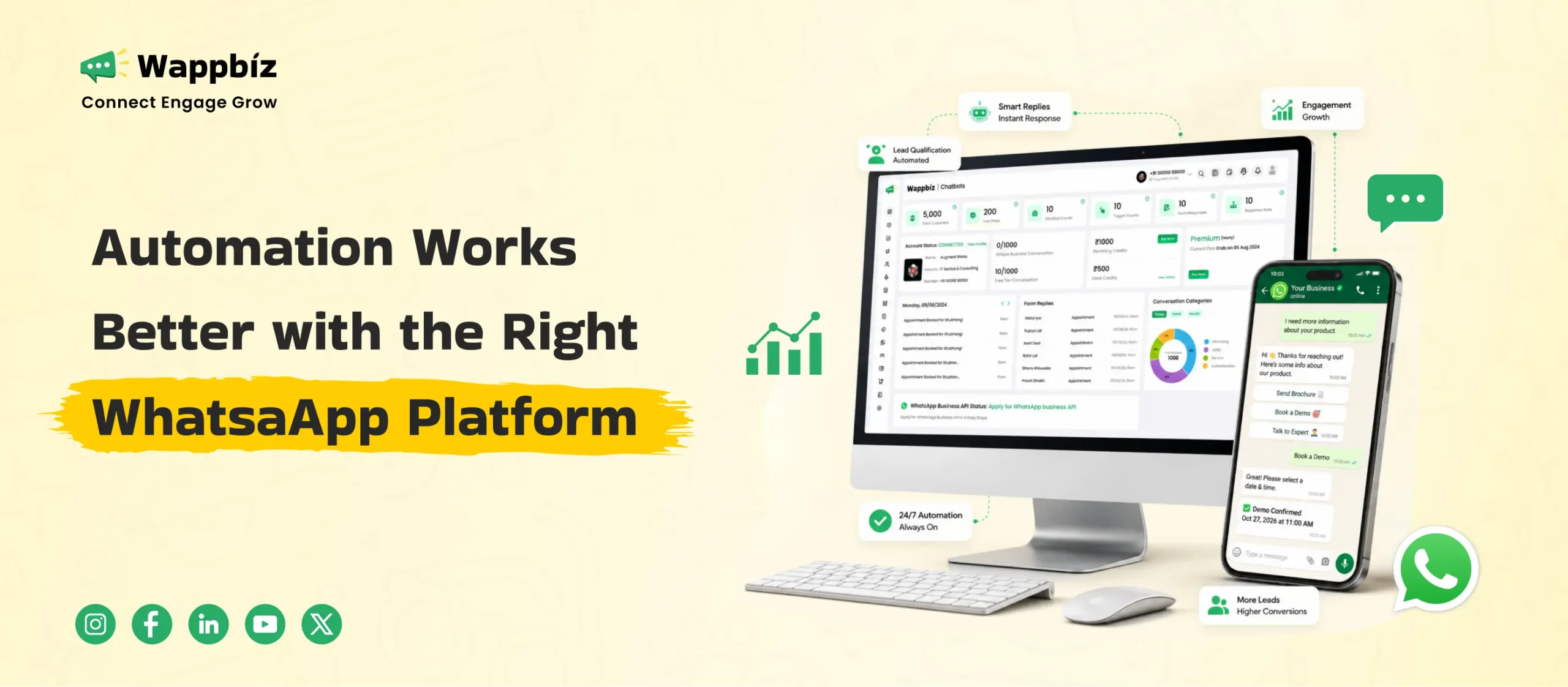
A WhatsApp marketing platform helps businesses manage, automate, and scale customer communication on WhatsApp. It utilizes campaigns, chatbots, CRM integrations, analytics, and team workflows. Instead of using WhatsApp only for manual replies or one-time broadcasts, businesses can use a structured platform to capture leads, send personalized messages, automate follow-ups, support customers, and track performance from one place.
Customers already use WhatsApp daily to ask questions, compare products, book appointments, track orders, and request support. The challenge is not whether businesses should use WhatsApp. The real challenge is whether they can manage WhatsApp conversations without missed leads, delayed replies, scattered customer data, or manual follow-up gaps.
This is where choosing the right WhatsApp marketing platform becomes important.
A good platform does more than send bulk messages. It helps your team build structured customer journeys, automate repetitive communication, personalize campaigns, connect with CRM systems, and measure what is working.
What Is a WhatsApp Marketing Platform?
A WhatsApp marketing platform is a software solution that allows businesses to use WhatsApp for customer engagement at scale. It usually works on top of the official WhatsApp Business API and provides a dashboard where businesses can manage campaigns, conversations, automation, templates, chatbots, contacts, and analytics.
With a WhatsApp marketing platform, businesses can:
- Send approved WhatsApp campaigns
- Automate customer replies
- Build chatbot flows
- Capture and qualify leads
- Segment customer databases
- Integrate WhatsApp with CRM or business systems
- Manage chats through a shared team inbox
- Track campaign performance
- Send reminders, updates, and follow-ups
Without a platform, businesses often depend on the WhatsApp Business App or personal numbers. That may work for a small number of conversations, but it becomes difficult when leads, customers, support queries, and campaigns increase.
A WhatsApp marketing platform brings structure to this communication.
Why Businesses Need More Than the WhatsApp Business App
Many small businesses begin with the WhatsApp Business App because it is simple and easy to use. It offers basic features like labels, quick replies, greeting messages, away messages, and catalogs. But as a business grows, the app starts showing limitations.
The common problems include:
- One person or a small team handles all replies manually
- Customer conversations get scattered across different phones
- Follow-ups depend on staff memory
- There is no proper CRM integration
- Campaign tracking is limited
- Chatbot automation is basic
- Bulk messaging is difficult to manage safely
- Managers do not get full visibility into conversations
- Leads are not automatically qualified or segmented
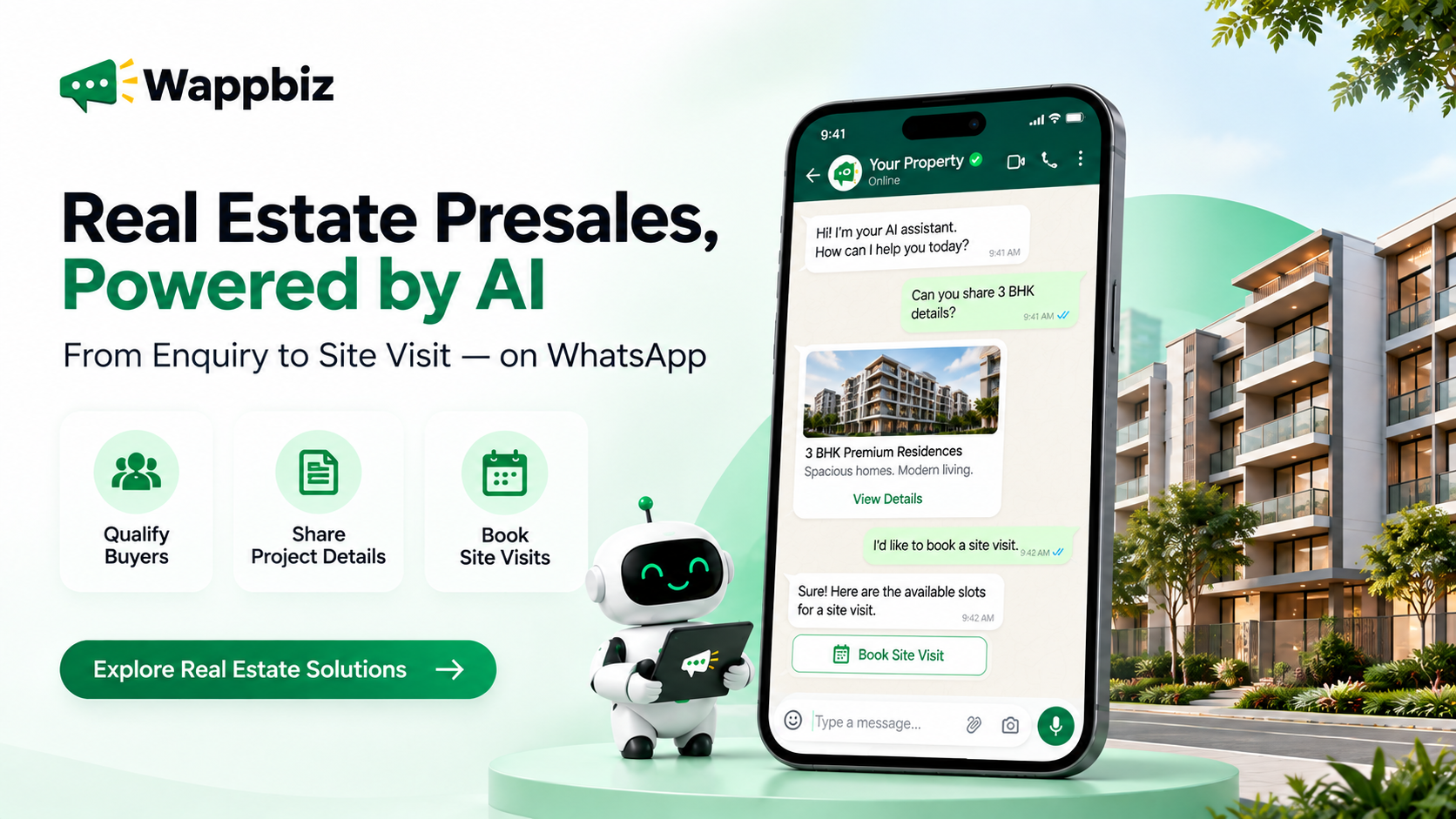
For example, a real estate company may receive leads from Facebook ads, property portals, hoardings, and walk-ins. If all enquiries are handled manually, some buyers may receive instant replies while others wait for hours. That delay can reduce trust and lower site visit chances.
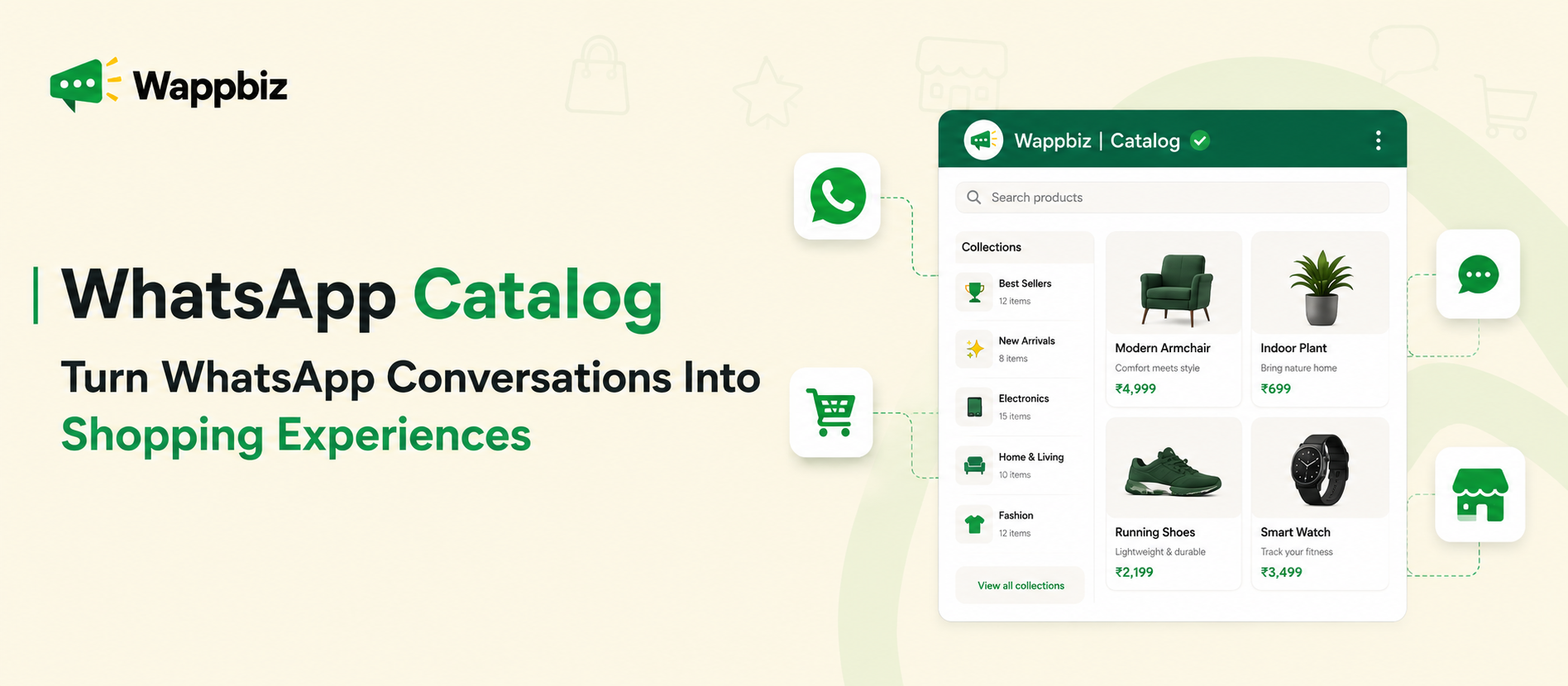
Similarly, an ecommerce brand may receive questions about order status, returns, product availability, and delivery updates. Handling every reply manually increases workload and slows down customer service.
A WhatsApp marketing platform solves this by making communication automated, trackable, and team-friendly.
Key Features to Look for in a WhatsApp Marketing Platform
Choosing the right WhatsApp marketing platform requires more than comparing pricing. The best platform should match your business goals, customer journey, team size, and growth stage. Here are the most important features to evaluate.
1. WhatsApp Automation for Faster Customer Engagement
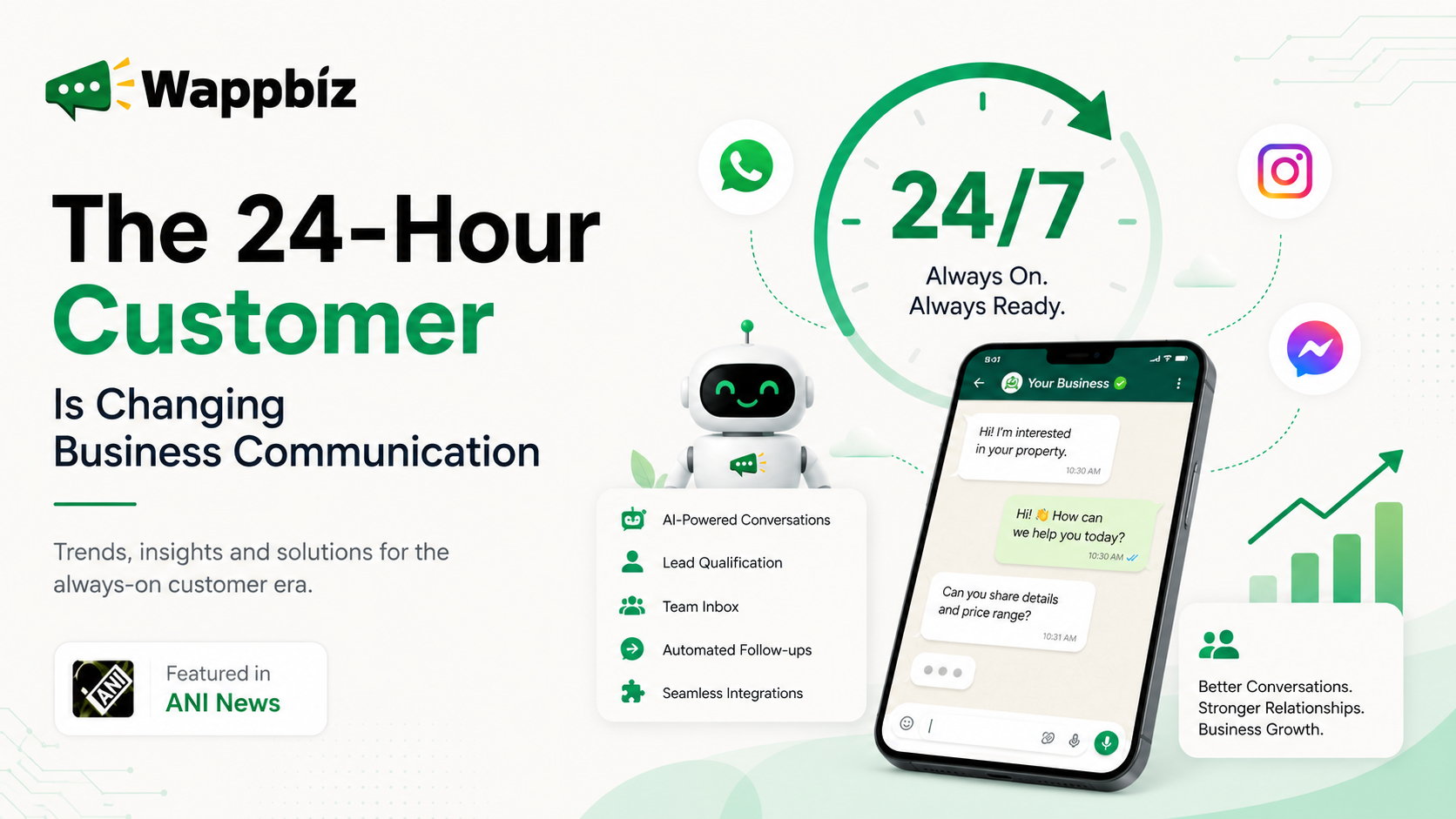
Automation is one of the biggest reasons businesses move to a WhatsApp marketing platform. Manual communication works only when message volume is low. Once leads and support queries increase, your team needs workflows that can respond instantly and continue the conversation without constant human effort.
A strong WhatsApp automation system should support:
- Instant replies to new enquiries
- Automated welcome messages
- Lead qualification flows
- Appointment reminders
- Payment reminders
- Order updates
- Abandoned cart messages
- Follow-up sequences
- Customer reactivation campaigns
- Event-based triggers
- Time-based drip campaigns
For example, when a customer fills a lead form or clicks a WhatsApp ad, the platform can automatically send a greeting message, ask qualifying questions, share relevant information, and assign the lead to the right sales agent.
This reduces response delay and keeps the customer engaged when their interest is highest.
Why WhatsApp Automation Matters
Speed matters in customer communication. When a buyer asks a question, they expect a quick response. If your business replies late, they may move to another provider.
Automation helps businesses:
- Respond instantly
- Reduce manual workload
- Improve lead nurturing
- Keep communication consistent
- Avoid missed follow-ups
- Increase conversion opportunities
The goal is not to replace human teams. The goal is to let automation handle repetitive communication while your team focuses on high-value conversations.
2. CRM Integration for Better Lead and Customer Management
A WhatsApp marketing platform becomes more powerful when it connects with your CRM. Without CRM integration, WhatsApp conversations remain separate from your sales pipeline. Your team may chat with leads, but important details like lead source, status, interest level, purchase history, and follow-up stage may not be tracked properly.
CRM integration helps businesses sync:
- New leads from WhatsApp
- Customer contact details
- Lead stage and status
- Conversation history
- Follow-up reminders
- Sales pipeline updates
- Booking or order details
- Customer preferences
For example, if a customer enquires about a product on WhatsApp, their details can automatically move into your CRM. A sales agent can see the customer’s interest, previous messages, campaign source, and next follow-up action.
This creates a connected sales process.
Why CRM integration is important
A CRM-connected WhatsApp marketing platform helps businesses avoid fragmented communication. It allows teams to:
- Track every lead properly
- Avoid duplicate follow-ups
- Personalize messages based on customer data
- Understand where each customer is in the journey
- Trigger automated messages from CRM events
- Improve sales team accountability
For real estate, this could mean sending site visit reminders based on scheduled appointments.
For ecommerce, it could mean sending order confirmations, shipping updates, and repeat purchase reminders.
For healthcare, it could mean sending appointment confirmations and follow-up visit reminders.
CRM integration turns WhatsApp from a chat channel into a business workflow channel.
3. AI Chatbots for Support, Sales and Lead Qualification
Chatbots are a key part of any modern WhatsApp marketing platform. A chatbot can handle common customer queries, qualify leads, collect information, recommend products, book appointments, and route complex conversations to human agents.
A useful WhatsApp chatbot should be able to:
- Answer FAQs
- Ask structured questions
- Capture name, phone number, location, and requirement
- Share brochures, catalogs, links, or documents
- Book appointments or demos
- Qualify leads based on budget, interest, or timeline
- Escalate conversations to the right team member
- Work outside business hours
For example, a coaching institute can use a chatbot to ask students about preferred course, city, batch timing, and exam goal. Based on the response, the chatbot can share course details and notify the admissions team.
A healthcare clinic can use a chatbot to help patients select a service, choose a doctor, book a slot, and receive appointment reminders. A real estate developer can use a chatbot to ask about budget, preferred location, property type, and purchase timeline before assigning the lead to a sales executive.
Why chatbots improve customer experience
Customers do not want to wait for basic answers. They want quick, clear, and relevant responses. Chatbots help businesses provide:
- Instant response
- 24/7 availability
- Faster lead qualification
- Lower support workload
- Consistent answers
- Better routing to human teams
The best WhatsApp marketing platform should allow businesses to create chatbot flows without heavy technical dependency. A no-code or low-code chatbot builder is especially useful for marketing, sales, and support teams.
4. Bulk WhatsApp Messaging with Compliance
Bulk messaging is one of the most searched features in WhatsApp marketing. Businesses want to send offers, product updates, event invites, festive campaigns, reminders, and announcements to large audiences. But bulk messaging on WhatsApp must be handled carefully.
A reliable WhatsApp marketing platform should support compliant bulk messaging through the official WhatsApp Business API.
Safe bulk messaging should include:
- Approved message templates
- Customer opt-in management
- Audience segmentation
- Personalization variables
- Campaign scheduling
- Opt-out options
- Delivery tracking
- Failed message retry
- Compliance with WhatsApp policies
This is important because WhatsApp is not designed for spam. Businesses that send irrelevant or unauthorized messages risk poor engagement, customer complaints, and messaging restrictions.
How to use bulk messaging effectively
Bulk messaging should not mean sending the same message to everyone. A better approach is to segment customers based on:
- Interest
- Location
- Purchase history
- Lead source
- Engagement level
- Customer lifecycle stage
- Product preference
- Last interaction date
For example, a jewellery brand should not send the same campaign to bridal customers, casual buyers, and inactive customers. A segmented campaign performs better because the message feels more relevant.
Examples of bulk messaging use cases
Businesses can use WhatsApp bulk campaigns for:
- Festive offers
- New product launches
- Appointment reminders
- Webinar invites
- Property updates
- Cart recovery
- Renewal reminders
- Customer feedback requests
- Loyalty campaigns
- Re-engagement campaigns
A good WhatsApp marketing platform helps you send campaigns at scale while maintaining relevance and compliance.
5. Analytics and Reporting for Smarter Decisions
Analytics is what separates guesswork from strategy.
If your business sends WhatsApp campaigns but does not track performance, you cannot understand what is working. You may know that messages were sent, but not whether they created engagement, replies, leads, orders, or conversions.
A strong WhatsApp marketing platform should track:
- Messages sent
- Messages delivered
- Messages read
- Replies received
- Clicks
- Campaign performance
- Lead conversion
- Agent performance
- Chatbot completion rate
- Failed messages
- Opt-outs
- Customer engagement trends
These insights help you improve future campaigns. For example, if a promotional message gets high reads but low replies, the offer or CTA may need improvement. If a chatbot flow gets many drop-offs at one question, that question may be too long or unclear. Analytics helps businesses continuously improve communication.
Why reporting matters for growth
Good reporting helps teams answer important questions:
- Which campaign generated the most leads?
- Which message format got better engagement?
- Which audience segment responded best?
- Which agent handled the most conversations?
- Which chatbot flow converted better?
- Which lead source produced better quality enquiries?
Without analytics, WhatsApp marketing becomes activity-driven. With analytics, it becomes performance-driven.
6. Shared Team Inbox for Sales and Support Teams
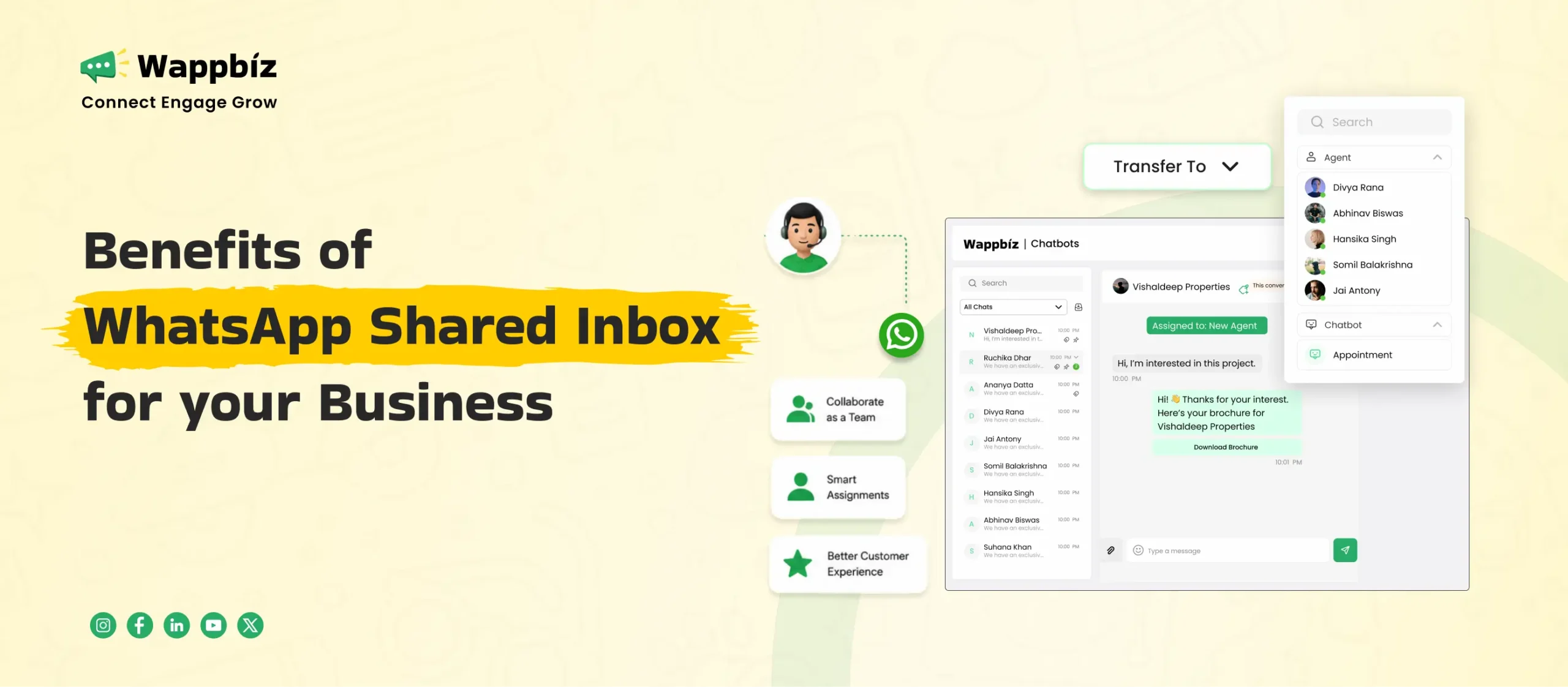
As customer communication grows, one person cannot manage all WhatsApp conversations effectively. A shared team inbox allows multiple agents to manage conversations from one centralized dashboard.
A shared inbox should support:
- Multi-agent access
- Conversation assignment
- Team routing
- Internal notes
- Customer history
- Agent ownership
- Status tracking
- Filters and tags
- Escalation workflows
This is especially useful for sales, support, admissions, healthcare, real estate, travel, logistics, and ecommerce teams.
Why a shared inbox is important
Without a shared inbox, teams often use personal numbers or shared devices. This creates confusion. Common problems include:
- Customers receive messages from different numbers
- Managers cannot track who replied
- Conversations get lost when employees leave
- Duplicate replies are sent
- Leads are not assigned properly
- Follow-ups are missed
A shared inbox gives businesses visibility and control. It ensures that every customer conversation has ownership.
7. Customer Segmentation and Personalization
A WhatsApp marketing platform should help businesses send the right message to the right customer at the right time. Segmentation allows you to divide customers into meaningful groups.
You can segment customers by:
- New lead
- Existing customer
- Repeat buyer
- Inactive customer
- High-intent prospect
- Location
- Budget
- Product interest
- Purchase date
- Campaign source
- Engagement level
Once customers are segmented, businesses can personalize communication.
Examples of personalization
Instead of sending: “Hi, check out our latest offer.”
You can send: “Hi {{name}}, the {{product}} you explored is now available with a limited-time offer. Reply YES to know more.”
Personalization improves relevance. Customers are more likely to respond when the message matches their interest, stage, or past behavior.
8. Drip Campaigns for Automated Follow-Ups
A drip campaign is a sequence of automated messages sent over time. It is useful when customers need multiple touchpoints before taking action.
Drip campaigns can be used for:
- Lead nurturing
- Customer onboarding
- Course enquiries
- Real estate buyer journeys
- Healthcare follow-ups
- Ecommerce repeat purchases
- Webinar reminders
- Post-purchase education
- Renewal campaigns
For example, a real estate developer can create a drip sequence like this:
- Day 1: Share project brochure
- Day 2: Ask preferred site visit slot
- Day 4: Share construction update
- Day 7: Send buyer FAQs
- Day 10: Offer call with sales advisor
This keeps the buyer engaged without manual chasing.
A WhatsApp marketing platform with drip campaigns helps businesses stay consistent throughout the customer journey.
9. WhatsApp Templates and Message Approval
When businesses initiate conversations through the WhatsApp Business API, they usually need approved message templates. Templates are pre-approved message formats used for marketing, utility, and authentication communication.
Common template use cases include:
- Offers and promotions
- Order confirmations
- Delivery updates
- Appointment reminders
- Payment reminders
- Booking confirmations
- OTP messages
- Event reminders
- Re-engagement messages
A good WhatsApp marketing platform should make template creation and management simple. It should help teams create, submit, organize, and use templates without confusion.
Why templates matter
Templates protect the customer experience by preventing spam and maintaining quality. They also help businesses send structured outbound communication safely.
When choosing a WhatsApp marketing platform, check whether it supports template categories, variables, media, buttons, and campaign use cases.
10. Industry-Specific Use Cases of a WhatsApp Marketing Platform
Different industries use WhatsApp differently. A strong platform should be flexible enough to support multiple business models.
Real Estate
Real estate businesses can use a WhatsApp marketing platform for:
- Click-to-WhatsApp lead capture
- Buyer qualification
- Brochure automation
- Site visit scheduling
- Site visit reminders
- Project updates
- Inventory updates
- Post-visit nurturing
- Old database reactivation
For builders and developers, WhatsApp can reduce lead leakage and improve buyer follow-up consistency.
Healthcare
Healthcare providers can use WhatsApp for:
- Appointment booking
- Appointment reminders
- Patient follow-ups
- Report notifications
- Medicine reminders
- Doctor availability updates
- Feedback collection
- Support query routing
For hospitals and clinics, structured WhatsApp communication improves patient convenience and reduces front desk workload.
Ecommerce and D2C Brands
Ecommerce brands can use WhatsApp for:
- Order confirmations
- Shipping updates
- Cart recovery
- Product recommendations
- Repeat purchase reminders
- Customer support
- Reviews and feedback
- Festive campaigns
For D2C businesses, WhatsApp helps improve retention and repeat sales through personalized engagement.
Education
Schools, coaching institutes, and edtech companies can use WhatsApp for:
- Course enquiries
- Admission counselling
- Demo class booking
- Fee reminders
- Batch updates
- Exam notifications
- Parent communication
- Student follow-ups
Education businesses can use automation to reduce manual counselling load and improve enquiry conversion.
Travel and Hospitality
Travel companies can use WhatsApp for:
- Package enquiries
- Booking confirmations
- Itinerary sharing
- Payment reminders
- Support during travel
- Feedback collection
- Rebooking offers
WhatsApp helps travel brands stay connected before, during, and after the trip.
Finance and Insurance
Finance businesses can use WhatsApp for:
- Lead qualification
- Document reminders
- Application updates
- Payment reminders
- Policy renewal messages
- Customer support
- Advisor assignment
Since trust and clarity are important in finance, structured communication helps customers stay informed.
How to Evaluate the Best WhatsApp Marketing Platform for Your Business
Before choosing a platform, businesses should evaluate both current needs and future growth. Here is a practical checklist.
1. Is it built on the official WhatsApp Business API?
The platform should support official WhatsApp Business API communication. This ensures better reliability, compliance, and scalability. Avoid unofficial tools that promise aggressive bulk messaging without opt-in or template approval.
2. Does it offer automation beyond basic replies?
Basic greeting messages are not enough. Look for:
- Trigger-based workflows
- Chatbot automation
- Drip campaigns
- Reminder automation
- Lead qualification logic
- Follow-up sequences
The platform should help you build complete customer journeys.
3. Can it integrate with your CRM or business tools?
If your business uses a CRM, ecommerce platform, booking system, or lead management software, integration is important. A connected system reduces manual data entry and improves visibility.
4. Does it support segmentation and personalization?
Campaigns perform better when messages are relevant. Choose a platform that allows you to tag, filter, segment, and personalize customer communication.
5. Does it provide clear analytics?
You should be able to measure performance easily. Look for campaign reports, delivery data, read tracking, reply tracking, click tracking, chatbot performance, and team activity.
6. Can your team collaborate inside the platform?
If multiple team members handle customer conversations, a shared inbox is essential. The platform should allow assignment, routing, ownership tracking, and centralized conversation history.
7. Is it easy to use?
A powerful platform should still be simple for your team to adopt. Look for a clean dashboard, no-code chatbot builder, easy campaign setup, simple template management, and guided onboarding.
Common Mistakes to Avoid While Choosing a WhatsApp Marketing Platform
Choosing only based on low pricing
The cheapest platform may not offer automation, support, analytics, or integrations that your business needs. Focus on value, not just cost.
Ignoring compliance
WhatsApp has rules for business messaging. Choose a platform that supports opt-ins, approved templates, opt-outs, and proper campaign practices.
Using WhatsApp only for promotions
WhatsApp should not be used only for offers. Use it across the full customer journey:
- Lead capture
- Qualification
- Nurturing
- Support
- Updates
- Retention
- Feedback
This creates better long-term engagement.
Not segmenting the audience
Sending the same message to everyone reduces relevance. Segment your audience before every campaign.
Not tracking performance
Without analytics, you cannot improve.Every campaign should be reviewed based on delivery, reads, replies, clicks, and conversions.
Why Wappbiz Is a Strong WhatsApp Marketing Platform for Growing Businesses
Wappbiz is built for businesses that want to move beyond manual WhatsApp communication and create structured customer engagement workflows. It helps businesses manage WhatsApp communication across sales, marketing, and support from one platform.
With Wappbiz, businesses can:
- Capture leads directly from WhatsApp
- Automate customer replies and follow-ups
- Build AI chatbot workflows
- Run personalized WhatsApp campaigns
- Send bulk messages using approved templates
- Manage conversations through a shared team inbox
- Integrate WhatsApp with business systems
- Track analytics and campaign performance
- Use drip campaigns for nurturing
- Improve response speed and lead conversion
Wappbiz is especially useful for businesses that handle high customer communication volume or need automation across multiple stages of the customer journey. Instead of depending on personal numbers, manual follow-ups, and scattered conversations, Wappbiz helps businesses build a centralized WhatsApp communication system.
The Future of WhatsApp Marketing Is Structured, Automated and Personalized
WhatsApp marketing is moving away from generic broadcasts. Customers now expect fast, relevant, and helpful communication. Businesses that send random promotions without context will struggle to maintain engagement. The future belongs to businesses that use WhatsApp as a structured communication channel.
That means:
- Automating repetitive tasks
- Personalizing every campaign
- Connecting WhatsApp with CRM
- Using chatbots for instant replies
- Tracking performance through analytics
- Supporting customers through shared inboxes
- Building lifecycle-based communication journeys
A WhatsApp marketing platform helps businesses achieve this without increasing manual workload. It is a complete communication system that helps businesses automate conversations, manage leads, support customers, integrate with CRM, run campaigns, and track performance.
The right platform should help your business respond faster, personalize better, follow up consistently, and scale communication without losing control. If your team is still managing WhatsApp manually, now is the right time to build a structured system.Wappbiz helps businesses automate, engage, and grow with WhatsApp Business API-powered marketing, sales, and support workflows. Ready to turn WhatsApp into a growth channel. Start your free trial with Wappbiz or book a demo today.