
Date: 1st July 2026
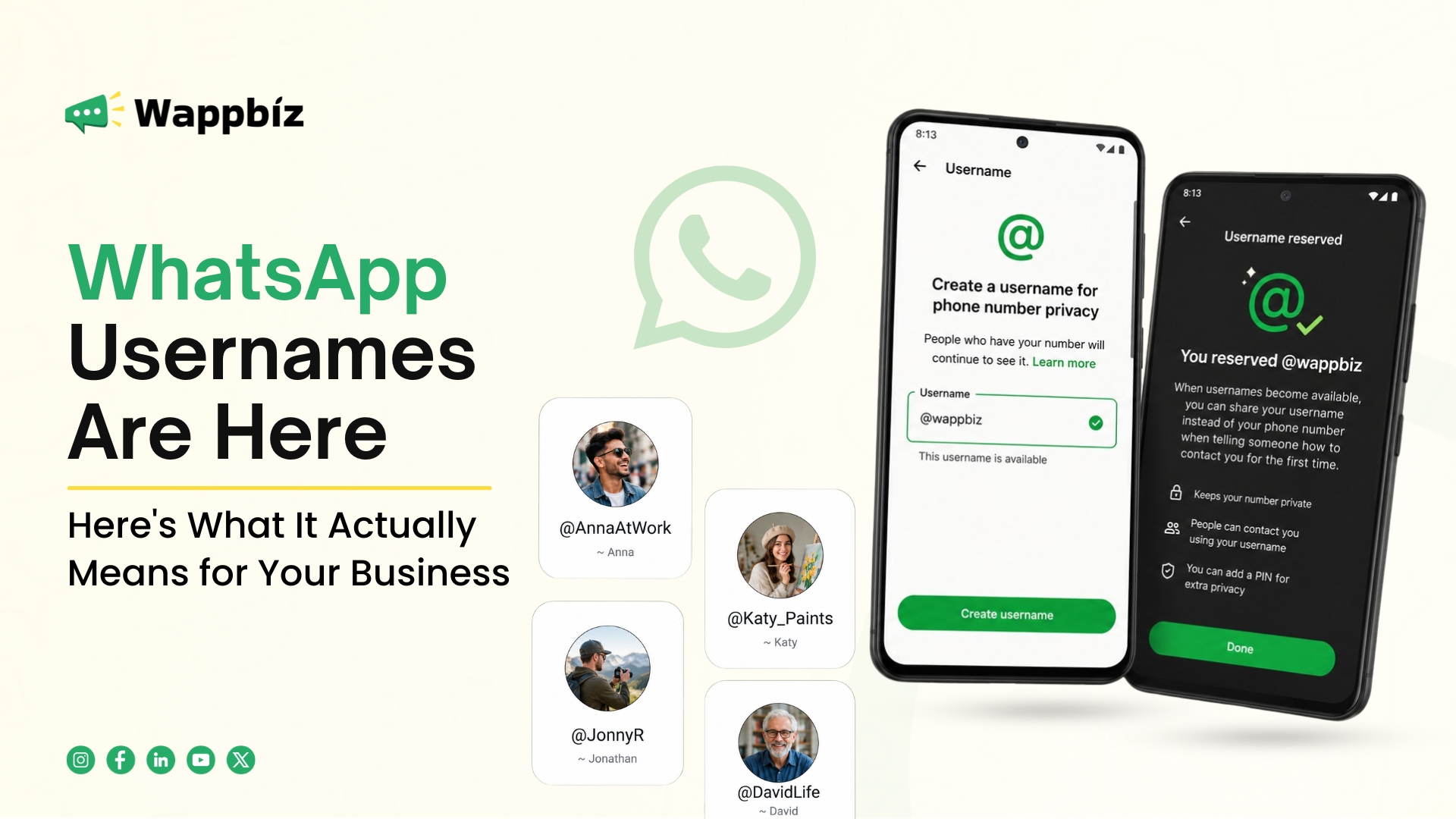
WhatsApp has begun rolling out usernames, letting users share a handle instead of a phone number. For personal users, it’s a useful privacy upgrade. For businesses, the implications are more nuanced.
What the feature actually does
A WhatsApp username is an optional handle users can set and share in place of their phone number. Usernames won’t appear in a public directory — someone typically needs to know your exact handle to reach you. Users can also add an optional username key, a short code required before a new message can be received, adding another layer of control. The feature is rolling out in phases, with reservations now open ahead of a broader launch later this year.
For API businesses: the shift worth watching
The more consequential change for WhatsApp Business API users is a new backend identifier called the Business Scoped User ID (BSUID). When a user who has adopted a username messages a business without sharing their phone number, the business’s webhook receives a BSUID rather than a phone number. Systems built around phone numbers as the customer identifier will need to be updated to handle BSUIDs correctly — or risk misrouting inbound conversations.
For continuity with existing customers, Meta’s Contact Book feature records phone-number-to-BSUID mappings from prior interactions. Verifying it’s enabled and that your BSP is handling the identifier correctly is worth doing now, before username adoption increases in your markets. Businesses running Click-to-WhatsApp ads should also test inbound flows to confirm routing works across both identifier types.
What a username doesn’t change
A business username does not hide your phone number the way a personal username hides a user’s. More importantly, it creates no new ability to reach users who haven’t opted in — WhatsApp’s opt-in, template approval, and compliance requirements remain fully in place. A username is a profile feature, not a broadcast channel.
What API-grade businesses actually need — and why your provider matters
For businesses serious about WhatsApp as a revenue and support channel, the username feature is a footnote. Features like BSUID are not one-time changes; they reflect how WhatsApp’s infrastructure continues to evolve. The infrastructure that actually moves the needle includes verified business profiles and Official Business Account status; automated responses and chatbot flows handling enquiries 24/7; CRM integration that preserves customer history regardless of identifier changes; approved template messaging for proactive outreach; and the ability to scale from hundreds to hundreds of thousands of conversations daily.
What this surfaces is how critical it is to be on a platform that keeps pace with Meta’s updates rather than leaving you to navigate technical changes alone. A provider that stays current with Meta’s developer documentation, updates webhook handling proactively, and ensures your CRM integrations keep working through platform changes is not a nice-to-have — it’s what keeps your customer conversations intact when WhatsApp makes its next move.
Wappbiz is built on WhatsApp’s Official Business API and stays aligned with Meta’s evolving platform, so the businesses on it don’t have to chase every update themselves. API businesses can also reserve usernames via WhatsApp Manager under Phone Numbers > Username — worth claiming for brand consistency. But the businesses that will perform on WhatsApp in 2026 and beyond are those with the full API stack in place.
The username feature is worth noting. The foundation underneath it is what actually determines performance.
Disclaimer: Technical claims relating to BSUID behaviour, webhook changes, and the Contact Book feature are based on Meta’s WhatsApp Business Platform developer documentation. Businesses should refer to Meta’s documentation directly for implementation guidance specific to their setup.