I often see developers do the hard part first. They invest in WhatsApp Business API, get it approved, connect it to their systems, and even set up a basic chatbot.
And then… they stop.
Messages go out. Enquiries come in. Teams respond manually. Follow ups happen when someone remembers. And after a few weeks, the same concern surfaces again:
“We have WhatsApp API, but it’s not really adding value.”
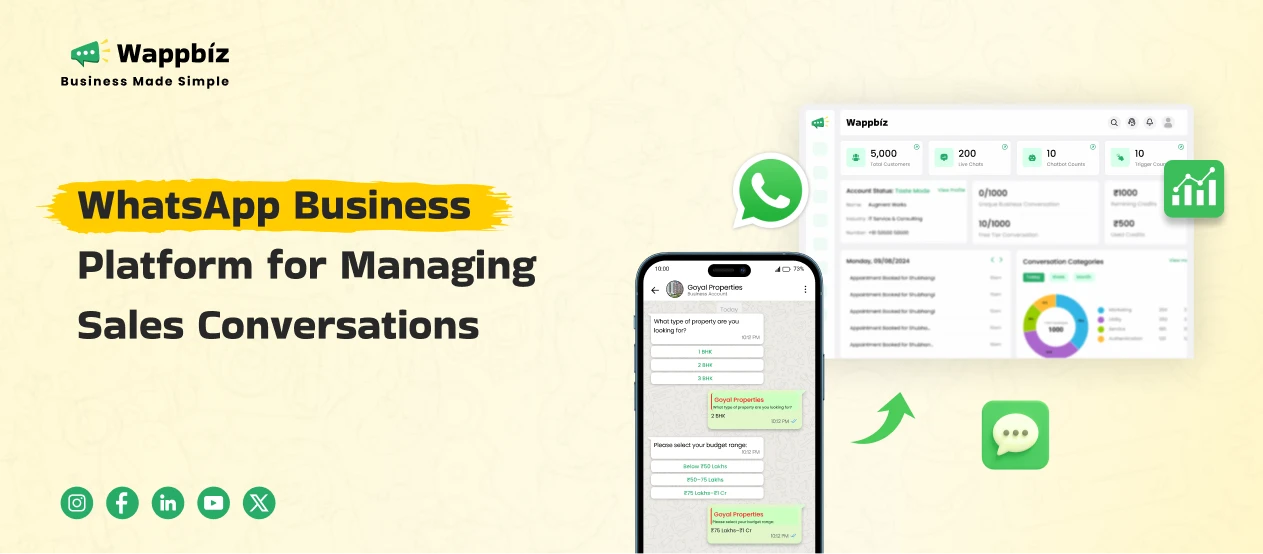
In most cases, the problem isn’t the API or even the chatbot. It’s that WhatsApp API automation for real estate is being used mechanically, not strategically.
WhatsApp Business API Is a Tool, Not a Strategy
This is the biggest misconception I see.
WhatsApp Business API doesn’t automatically improve conversions. It only gives you the ability to design better conversations at scale. What actually drives results is everything built around it. The message flow, the automations, the follow ups, and the routing.
Without these in place, WhatsApp quietly becomes just another inbox.
What’s Missing in Most Setups
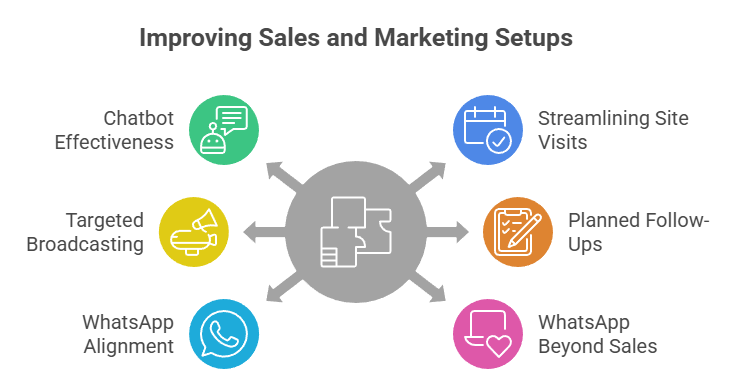
1. Chatbots That Don’t Move Leads Forward
Many teams do set up a chatbot but only at a surface level. It greets the buyer, maybe shares a brochure, and then hands things over to sales.
What’s missing is intentional design.
A well-designed chatbot should:
- Capture intent early
- Qualify interest gradually
- Trigger the right next step (like a site visit)
If you want to go deeper into how that flow should work, we’ve already covered this in detail in our earlier piece on why most real estate chatbots don’t work. The key takeaway is simple: the chatbot isn’t the end, it’s the starting point.
2. Site Visits Are Still Too Manual
Site visits are where real conversion happens, yet they’re often handled through back-and-forth calls and messages.
With WhatsApp API, this doesn’t need to be manual.
Instead:
- Buyers can book site visits directly through WhatsApp after qualification
- Available dates and time slots can be shared automatically
- Location pins and visit details can be sent instantly
- Reminders can go out without someone having to remember
Even during a physical site visit, asking visitors to scan a QR code lets them instantly receive project details on WhatsApp and ensures the lead is captured digitally, without registers or manual entry.
3. Broadcasting Happens But Without Segmentation
Most teams broadcast messages on WhatsApp. The issue is that everyone receives the same message, regardless of intent or buying stage.
Without segmentation:
- Explorers get pushed too early
- Serious buyers aren’t prioritised
- Messages feel irrelevant
This doesn’t just affect engagement. It increases broadcasting costs and lowers ROI, because a large part of the audience isn’t ready or interested in what’s being sent.
WhatsApp Business API allows leads to be segmented by intent, budget comfort, and timeline. For example, first-time home buyers respond better to messages around affordability and loan support, while investment-focused buyers care more about returns and location potential.
When messages reflect these differences, broadcasts perform better and spend is used more effectively.
4. Follow-Ups Need a Plan
Most follow-ups fail not because teams don’t care, but because they’re unplanned. After the first conversation, everything depends on memory and manual effort.
With API-driven drip campaigns, follow-ups can be planned in advance:
- A message sent a few days after a site visit
- A gentle nudge if there’s no response
- Periodic, value-driven updates that keep interest alive
These messages aren’t sales pushes. They’re meant to be useful, timely, and relevant, so the buyer stays engaged without feeling chased. When follow-ups are planned this way, conversations don’t fade, they progress naturally.
5. WhatsApp Aligned With Sales and Marketing
Another missed opportunity is using WhatsApp as a standalone channel, instead of aligning it with ongoing sales and marketing activity.
Exhibitions are a good example. When WhatsApp is part of the flow, visitors can scan a QR code at the stall, receive project details instantly, and continue the conversation digitally after the event. This ensures leads don’t get lost once the exhibition ends.
We’ve covered this approach in more detail in our earlier blog on preparing for real estate exhibitions, where WhatsApp-led journeys play a key role in improving post-event follow-ups.
6. WhatsApp Beyond Sales
Another missed opportunity is using WhatsApp only for sales conversations. In reality, it can play a role throughout the entire buyer journey, including after-sales communication.
WhatsApp can be used to:
- Share regular project updates or construction progress
- Send walkthrough videos or possession-related information
- Highlight nearby infrastructure, amenities, or community updates
- Keep buyers informed even after booking
When communication continues in this way, buyers feel reassured and informed, which builds trust in the builder. That trust often extends beyond the transaction, making buyers more comfortable recommending the project to friends or family.
Final Thought
WhatsApp Business API works best when it complements everything else you’re already doing, ads, exhibitions, site visits, follow-ups, instead of operating on its own.
When conversations, automation, segmentation, and follow-ups are designed as one connected journey, WhatsApp stops being just another channel and starts becoming a reliable growth lever.If you’re already using WhatsApp Business API through Wappbiz and want help setting up these flows for your project, our team can support you with the right structure and guidance based on your sales and marketing needs.