

For most homebuyers, the real estate journey follows a familiar rhythm.
They enquire about a project.
They receive a few calls.
They coordinate with an agent and visit the site.
Forms are filled.
Brochures are shown.
Pricing, location, and layouts are explained.
The buyer leaves with a lot of information and says they’ll get back.
This experience isn’t broken. It just doesn’t stand out.
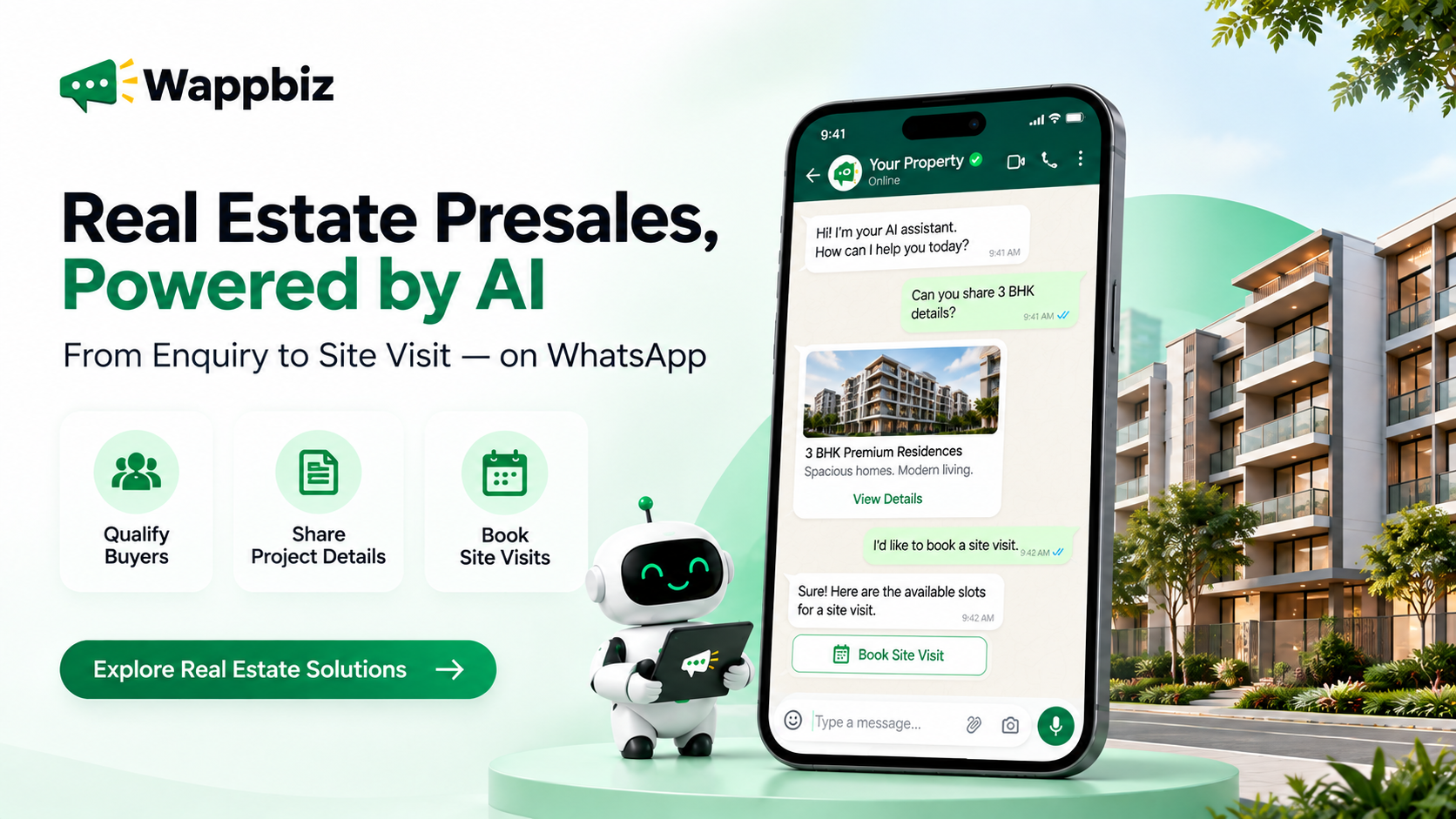
This is where WhatsApp marketing for real estate is meant to make a difference, not by replacing the existing process, but by strengthening it where traditional touchpoints fall silent.
Where Real Estate Buyer Journeys Begin to Fade Out
In a traditional setup, the sales process is largely agent-led.
The agent explains the project.
The buyer listens, absorbs, asks questions.
A lot of information is shared in a short window.
When the buyer walks out, the conversation often pauses. Follow-ups happen later, usually through calls, and the buyer tries to remember how this project was different from the last two they saw.
Nothing went wrong.
From a marketing perspective, this is where recall weakens and differentiation gets lost.
The Difference Isn’t the Buyer. It’s the Journey Around Them.
I’ve seen the same buyer intent lead to two very different outcomes.
In one, conversations restart from scratch. Details are repeated, follow-ups feel disconnected, and interest slowly fades. Sales teams put in more effort just to stay visible.
In the other, context carries forward. Follow-ups reference earlier discussions, conversations pick up where they left off, and momentum builds naturally.
Same buyer.
Same sales effort.
Very different results.
The difference isn’t what happens during the site visit.
It’s what supports the journey between interactions.
And that’s exactly where the experience starts to change.
How a Nurtured Real Estate Buyer Journey Changes Everything
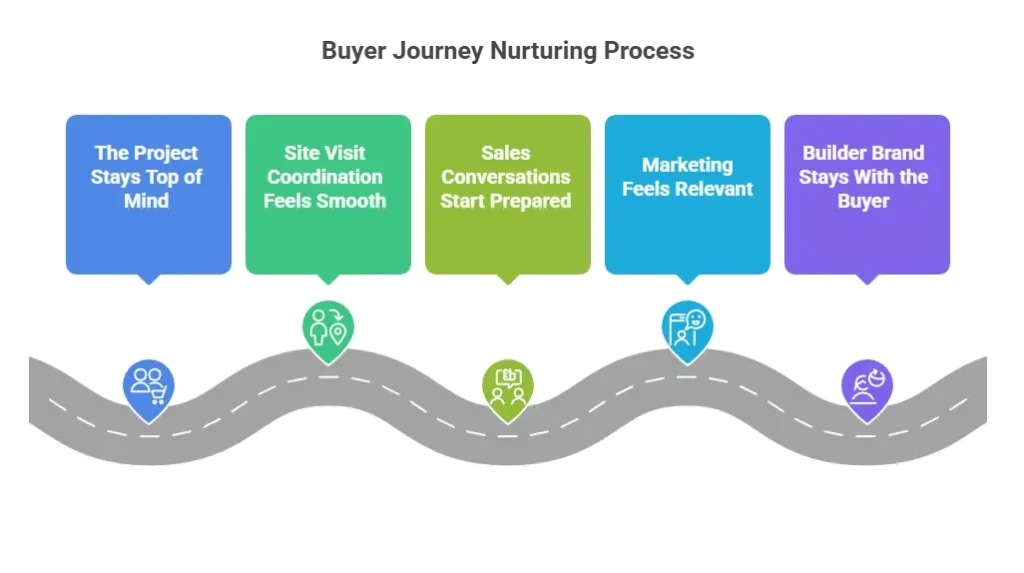
The biggest shift I’ve seen isn’t about doing something new.
It’s about removing gaps between existing sales steps.
When those gaps are closed, the buyer experience starts to feel very different.
1. Buyers Don’t Have to Rely on Memory Alone
In most site visits, buyers are given a brochure and walked through the project in detail. That works fine until they’ve visited three or four sites in the same week. At that point, brochures start blending into each other, and it becomes hard to recall what stood out about which project.
When rich content like walkthrough videos, sample flat clips, layouts, and brochures are shared digitally in the same conversation, buyers don’t have to rely on memory. They can revisit the entire experience anytime, scroll back, rewatch, and reconnect with the project on their own terms.
Instead of feeling overloaded, buyers feel supported. Everything they need is right there when they’re ready to look again. From a marketing standpoint, this keeps the project top-of-mind without needing repeated calls or reminders.
2. Site Visit Coordination Feels Smooth
Sales teams usually do follow up. Calls are made, reminders are given, confirmations happen. The issue isn’t effort. It’s that repeated calls can start to feel intrusive, especially when buyers are still comparing options.
When site visit details, time slots, location pins, and reminders are shared through messages, the process feels lighter. Buyers get the information without feeling chased, and reminders don’t interrupt their day.
Sales teams save time, buyers feel respected, and visits happen without unnecessary friction.
3. Sales Conversations Start Prepared
One frustration buyers rarely say out loud is this:
“I’ve already explained this.”
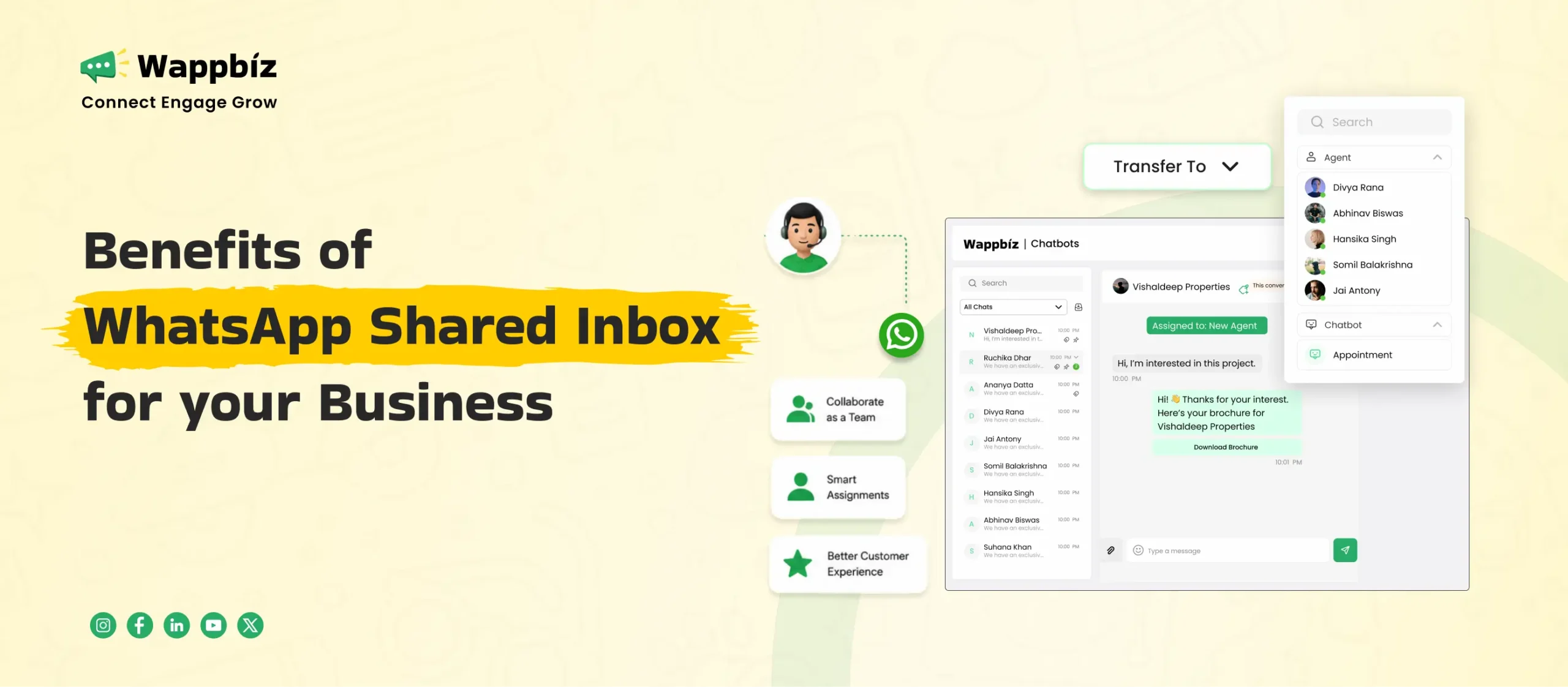
When sales agents can see the earlier conversation, what the buyer viewed, what questions they asked, and what they seemed concerned about, they can prepare before the visit. Instead of repeating basics, they spend time building rapport and addressing the buyer’s real pain points.
Buyers feel listened to. Sales conversations feel sharper. And the interaction moves forward instead of looping back.
4. Follow-Ups Feel Relevant
Most follow-ups fail not because they’re late, but because they sound the same. Messages like “Just checking in” don’t really help a buyer who’s still weighing a decision. This is where WhatsApp shifts from being a follow-up channel to a marketing channel.
What works better is follow-up that reflects why the buyer paused in the first place.
If budget was the concern, clarity around payment plans or loan support helps. If the buyer was evaluating long-term value, context around location growth or future potential resonates more.
When buyer interactions are quietly segmented through conversation, broadcasts and follow-ups can be tailored by intent, making marketing communication feel personal rather than promotional. We’ve explored this approach in more depth in our earlier blog on why WhatsApp API automation for real estate isn’t delivering results, where the focus is on designing message flows that support decision-making, not just reminders.
When follow-ups are shaped around buyer concerns, they don’t feel like nudges. They feel like guidance.
5. The Relationship Continues After Booking
For buyers, this isn’t just a transaction. It’s a future home. Silence after booking often creates unnecessary anxiety, even when everything is on track.
Regular updates around construction progress, installment timelines, possession milestones, or community developments help buyers feel confident and reassured. Over time, this builds trust and loyalty toward the builder, shaping a brand buyers recognise and feel confident recommending.
That trust becomes powerful in the long run. Buyers who feel taken care of are far more likely to recommend the builder and stay engaged with future launches.
Final Thought
Conversions don’t slow down because teams aren’t following up.
They slow down because buyers lose connection with the project between interactions.
When marketing communication drops off between interactions, sales has to work twice as hard to rebuild momentum.
When the sales journey is designed to carry context forward, reduce repetition, and add value at the right moments, buyers don’t need to be pushed. They move forward with clarity and confidence.
That’s what separates effort-heavy sales from experience-led sales that quietly moves forward.If you’re already thinking about how to make your sales process feel more connected from enquiry to booking and beyond, the team at Wappbiz can help you think through how to structure that support layer around what you’re already doing.
FAQs
What is the scope of WhatsApp marketing in real estate?
Real estate agents can connect with clients in the most seamless way possible with WhatsApp marketing, as it allows for property inquiries, follow-ups, and bookings in a matter of seconds.
Can you generate more property viewings or ultimately sales through WhatsApp marketing?
Absolutely! WhatsApp allows agents to book visits, send reminders, and share property information and therefore generate more interest and interaction with their clients.
How Does WhatsApp Marketing Help Real Estate Agents Make More Engaged Clients?
Agents can send property listings, virtual tours, and updates with WhatsApp, keeping their clients informed and excited about properties.
Does WhatsApp marketing reduce expenses for real estate professionals?
WhatsApp can be an inexpensive option for handling all your client communication, advertising the listings, and increasing interactions without spending much on marketing.
How does WhatsApp help with lead generation in real estate?
You could send follow-ups, automated replies, or property recommendations that wire into more leads via WhatsApp messages to real estate agents.
Is WhatsApp secure in terms of client information when it comes to real estate?
Definitely! As an added feature, WhatsApp’s end-to-end encryption leaves no room for clients’s data and communication leakage, ensuring confidentiality.
How can WhatsApp marketing help collect feedback post-property view?
Agents can solicit feedback from clients after viewings, allowing them to enhance their service and better work with client needs.
Does WhatsApp help to promote new property listings and open homes?
Absolutely! Agents can keep interested clients in the loop, sending concise and simple updates about new listings, open house events, or exclusive property offers.
Can they offer the buyers success as WhatsApp marketing lets you reply immediately?
For sure, clients can rapidly throw questions, request information, and take immediate updates for a more interactive real estate experience.