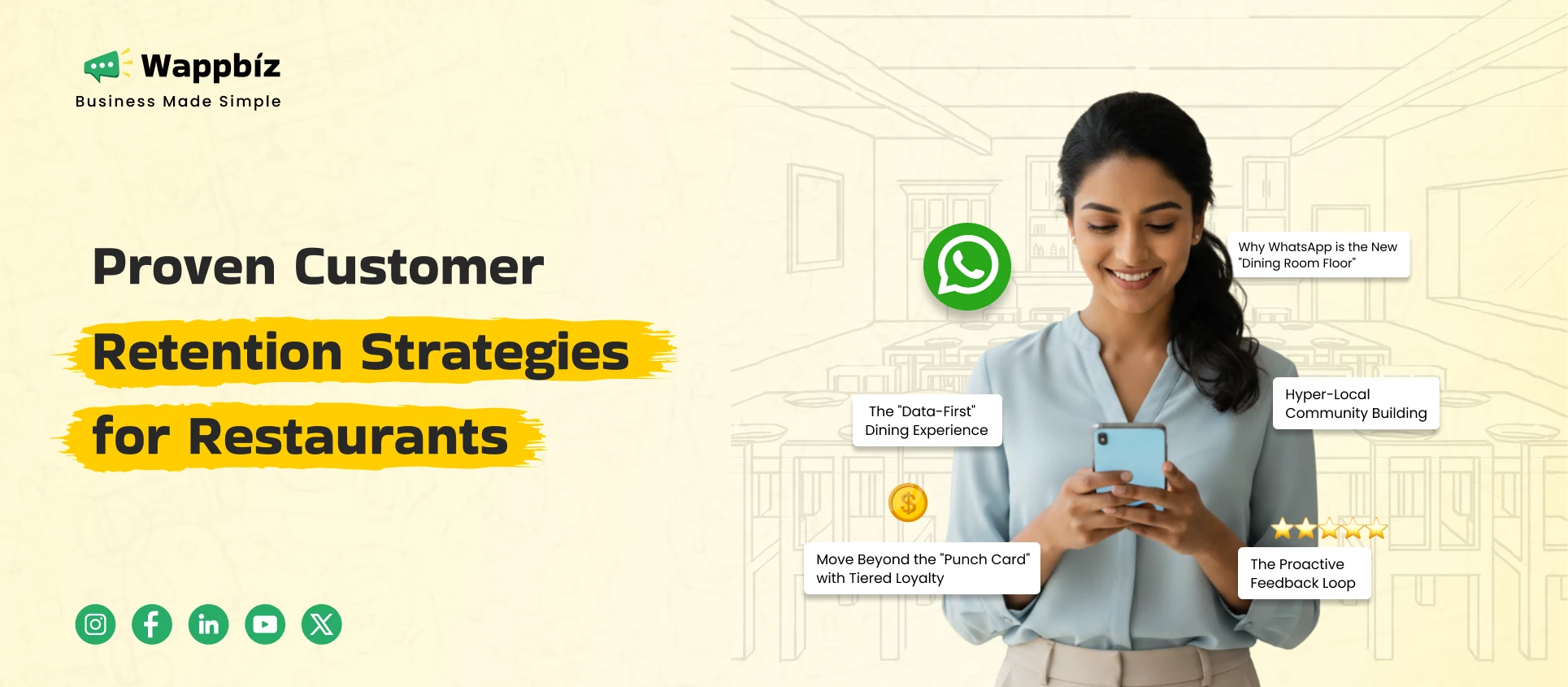
Customer retention strategies for restaurants are now critical for daily operations and long-term success. Getting new customers is expensive, and many restaurants lose repeat guests without knowing why. When customers do not return, revenue becomes unstable, and marketing costs keep rising.
This blog explains what customer retention means for restaurants today. It focuses on practical ways to keep guests coming back, improve loyalty, and increase profits. These strategies help restaurants grow without depending only on ads, discounts, or constant new promotions.
What is a Customer Retention Strategy?
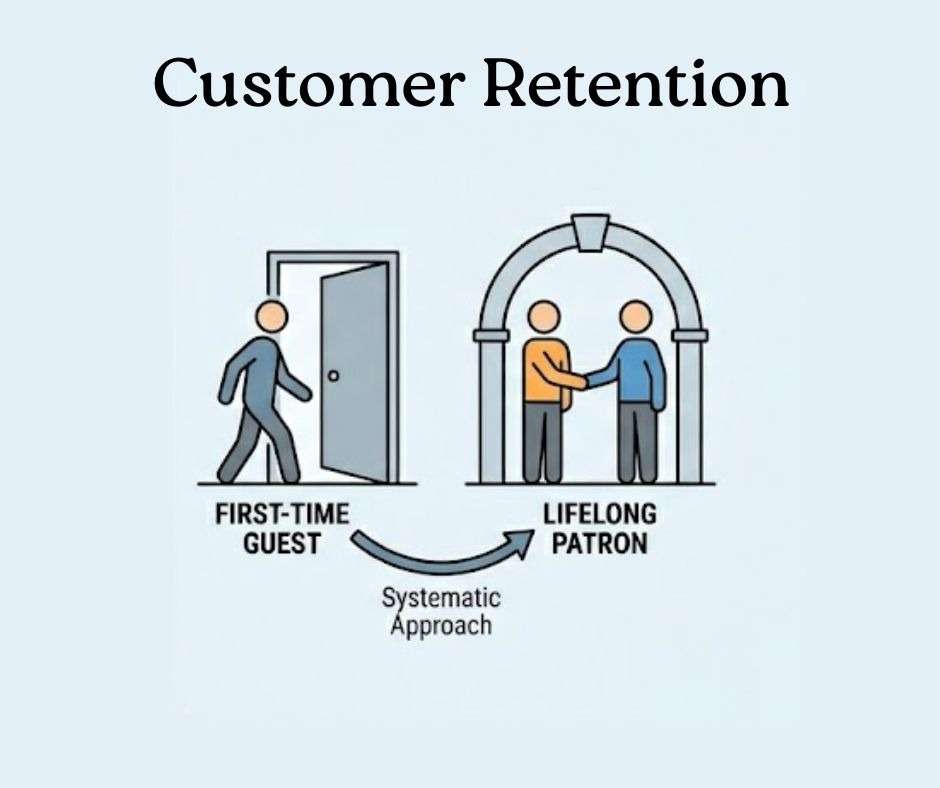
A customer retention strategy is a systematic approach to ensuring that a first-time guest becomes a lifelong patron.
However, looking at it through a professional lens, it is far more than just “being nice” or offering a discount. It is the coordinated effort of your operations, your data, and your communication channels to reduce “churn,” the rate at which customers stop visiting your establishment.
While customer retention marketing often gets confused with “advertising,” the two are polar opposites. Advertising is the expensive art of talking to people who don’t know you. Retention is the profitable science of talking to the people who already do. It involves analyzing guest behavior and identifying friction points in their journey.
Why Restaurant Customer Retention Strategies Fail
Before we dive into solutions, let’s talk about why most retention efforts don’t work.
The typical approach looks like this a punch card, a generic “10% off your next visit” email that lands in the spam folder, and maybe a birthday coupon sent three weeks late. These aren’t retention marketing strategies they’re lazy guesses.
Real customer retention management strategies require three things: data about your guests, a way to communicate with them that they actually see, and automation so it happens consistently. Most restaurants have none of these in place.
6 High-Impact Customer Retention Strategies for Restaurants
1. Conversational Commerce: Why WhatsApp is the New “Dining Room Floor”
In the old days, a great restaurateur spent their night walking the floor, shaking hands, and remembering names. In 2026, the “floor” has moved to the customer’s smartphone.
While most businesses are still spamming “no-reply” emails that land in the promotions tab, the smartest operators are moving toward retention marketing through WhatsApp. Why? Because it has a 98% open rate. It isn’t an “ad”; it’s a conversation.
The goal isn’t to blast your menu to everyone. It’s about client retention strategies that feel personal. Imagine a system that automatically sends a personalized message to a guest who hasn’t visited in 21 days, or a simple “Happy Birthday” note with a reserved table offer. To do this at scale without looking like a “bot” or getting flagged by Meta, you need a robust infrastructure. This is where official WhatsApp Business API providers, like WappBiz, become essential. They allow you to bridge the gap between automated efficiency and that “small-town” personal touch, ensuring your communication is both compliant and deeply personal.
Here are three WhatsApp message templates you can use today:
Hi [Name], it’s been a while since we’ve seen you at [Restaurant Name]! Our chef just added [seasonal dish] to the menu and we thought of you. Your usual table is waiting reply “TABLE” and I’ll book you in this week. – [Your Name]
Hello [Name], before we announce our new tasting menu publicly, we wanted to give our regulars first access. Only 6 slots available this Thursday, interested? Reply YES, and you’re in.
Start simple: Send these manually to 10-20 of your regular guests this week. Track who responds. You’ll likely see a 40-50% response rate compared to the 2% you get from email.
2. The “Data-First” Dining Experience
The biggest mistake I see is a restaurant that treats every guest like a stranger. Customer retention management strategies only work when you have a memory.
If a guest always orders the vegan gluten-free pasta, sending them a 20% off coupon for a Ribeye steak is a fast way to show them you aren’t paying attention. By leveraging your POS data and integrating it with your communication tools, you can segment your audience.
Retention is about sending the right message to the right person. If you know a guest prefers white wine over red, your customer retention marketing should reflect that. Data isn’t just numbers it’s the digital version of a “reserved” sign for your best regulars.
3. Move Beyond the “Punch Card” with Tiered Loyalty
Standard loyalty programs are often a race to the bottom on price. If the only reason a customer returns is for a free appetizer, they aren’t loyal to you; they’re loyal to the discount.
Effective restaurant customer retention strategies focus on “Emotional Loyalty.” Instead of a simple 10th-meal-free setup, consider a tiered system:
Tier 1: Standard rewards.
Tier 2: Secret menu access.
Tier 3: The “Owner’s Table” (The ability to skip the waitlist on a Friday night).
This creates a sense of belonging. The retention of customers is much higher when the reward is “status” and “access” rather than just a five-dollar saving.
4. The Proactive Feedback Loop
A guest who has a bad experience but doesn’t tell you is a guest you’ve lost forever. Worse, they’ll tell ten other people online.
Sophisticated customer retention strategies involve catching the friction before it hits Google Reviews. Send a quick, automated message via WhatsApp an hour after their meal asking for a 1–5 rating. If the rating is a 1 or 2, have it immediately alert the manager’s phone.
For example: Hi [Name], thanks for dining with us today! On a scale of 1-5, how was your experience? [1] [2] [3] [4] [5]
By reaching out personally to fix a mistake within 30 minutes, you often turn a disgruntled diner into a lifelong advocate. This is the “Service Recovery Paradox”: a customer who had a problem fixed often becomes more loyal than one who never had a problem at all.
5. Hyper-Local Community Building
In the digital age, we’ve forgotten that restaurants are physical anchors of a community. Your customer retention marketing strategies should involve the people who live within a 3-mile radius of your front door.
Partner with local gyms, offices, or schools. Create “Neighbour Nights.” By positioning your restaurant as the “Third Place” (the place between work and home), you stop being a “choice” and start becoming a “habit.” Habitual behaviour is the ultimate goal of any customer retention strategy.
6. Selling the “Sizzle,” Not Just the Steak
Finally, remember that in 2026, people don’t go out just to eat, they go out for an experience they can’t replicate at home.
Whether it’s an open-fire kitchen, a unique playlist, or a signature table-side service, your “experience” is your moat. If your food is the same every time, but the feeling of being there is special, you’ve mastered the art of retention. Use your digital channels to tell the story of your ingredients, your staff, and yours “why.” People stay loyal to people, not to corporations.
If you increase your customer retention by just 5%, your profitability can increase by 25% to 95%.
Acquisition is expensive and exhausting. Retention is profitable and sustainable. By shifting your focus from “How do I get more people in?” to “How do I make the people who are already here feel seen?”, you build a business that can weather any economic storm.
The tools have changed, moving from the handwritten ledger to automated API solutions like WappBiz, but the principle remains the same:
Give them a reason to come back, and they will.Ready to stop the leak? See how WappBiz can automate your retention strategy today.