
Across most Indian service businesses today, a large share of customer conversations already happens on WhatsApp.
Industry estimates suggest more than 175 million people message businesses on WhatsApp every day, and India remains its largest user market. Enquiries, product discussions, pricing negotiations, and even deal closures increasingly unfold inside a single chat thread.
The WhatsApp Marketing Platform has quietly become the place where many revenue conversations actually happen.
What is interesting is that while communication has shifted there, operations often haven’t.
In many companies, these conversations still sit inside individual chat histories rather than structured systems. Leads remain tied to personal phones, follow-ups depend on individual discipline, and teams have limited visibility into how conversations progress.
Nothing about this feels like a problem at the moment.
But as the volume of conversations grows, it becomes harder for the business to clearly see the movement of its own sales pipeline.
Where the Real Challenge Begins
When WhatsApp starts carrying a large share of sales conversations, the issue is rarely communication.
The issue is visibility.
Leads may be coming in consistently, conversations may be active, and teams may feel busy responding to enquiries. But without a structured way to manage those conversations, it becomes difficult for the business to clearly see what is actually progressing.
Which enquiries are moving forward.
Which conversations have quietly gone cold.
Which prospects were interested but never followed up with.
Over time, this creates a subtle but important gap between activity and outcomes.
Teams are busy talking to customers every day.
But the business has limited clarity on how many of those conversations are actually converting.
And that is usually the moment companies begin to realise that WhatsApp cannot remain just a chat tool inside the organisation.
How Businesses Structure Sales Conversations on WhatsApp
Once businesses begin treating WhatsApp as part of their operational system rather than just a messaging tool, a few structural shifts start to appear.
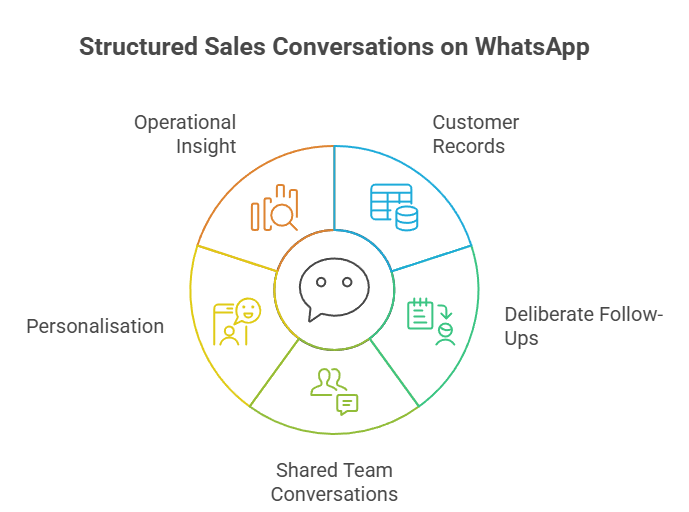
1. Conversations Become Customer Records
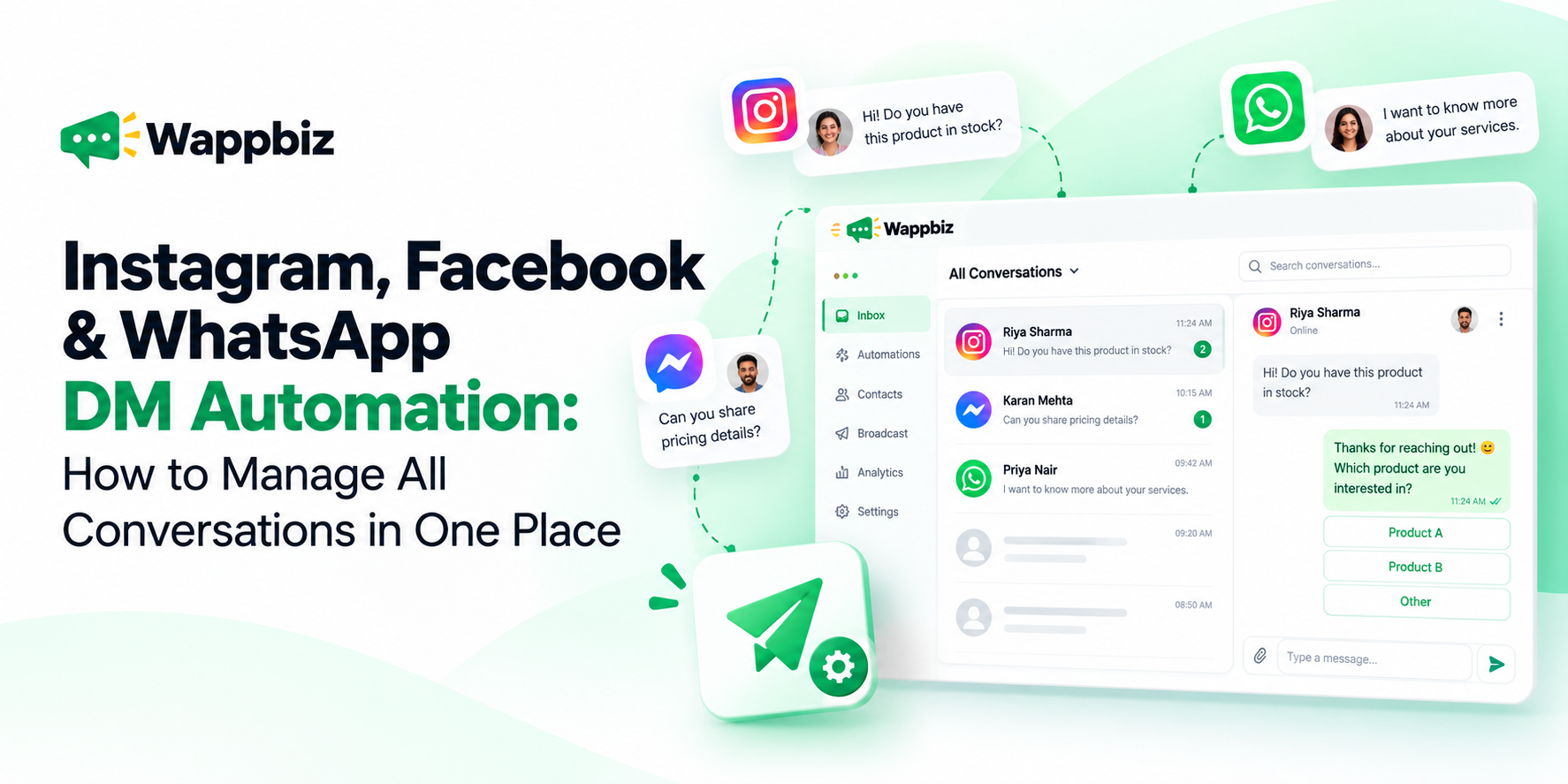
When chats automatically sync with a whatsapp business crm, every enquiry, response, and follow-up becomes part of a structured customer record.
Instead of conversations living inside individual phones, the organisation now has a complete view of customer history.
Teams can see when the first enquiry came in, what was discussed, which product or service the customer was interested in, and how the conversation progressed.
Over time, this creates something extremely valuable for the business: institutional memory.
Even if team members change, the relationship context remains intact.
2. Follow-Ups Become More Deliberate
Good sales teams rarely forget to follow up.
They naturally prioritise conversations that feel most promising at the moment.
Hot leads receive immediate attention. Conversations that go cold gradually move down the list.
The challenge is that some of those colder conversations still carry potential — just not right now.
Without structure, these leads often remain dormant inside chat histories. There is no systematic way to revisit them at the right moment.
When follow-ups are organised within a system, businesses can re-engage those conversations strategically rather than randomly.
Over time, this turns what would otherwise be lost or ignored enquiries into recoverable revenue opportunities.
3. Shared Team Conversations
As companies grow, customer conversations rarely belong to a single individual.
Sales may initiate the relationship, support may assist later, and operations may step in during delivery.
Through whatsapp crm integration, conversations become visible across the organization while still maintaining ownership and accountability.
This creates continuity internally but it also improves the experience for the customer.
Instead of switching between different phone numbers or departments, customers can continue their conversation on the same number while the business manages coordination behind the scenes.
4. Customer Data Powers Personalisation
One of the most powerful outcomes of connecting WhatsApp with internal systems is that conversations begin to interact with existing customer data.
Information such as purchase history, buying preferences, service usage, or demographic details stored inside a whatsapp business crm can inform how businesses communicate.
Instead of sending the same message to everyone, companies can tailor communication based on what they already know about the customer.
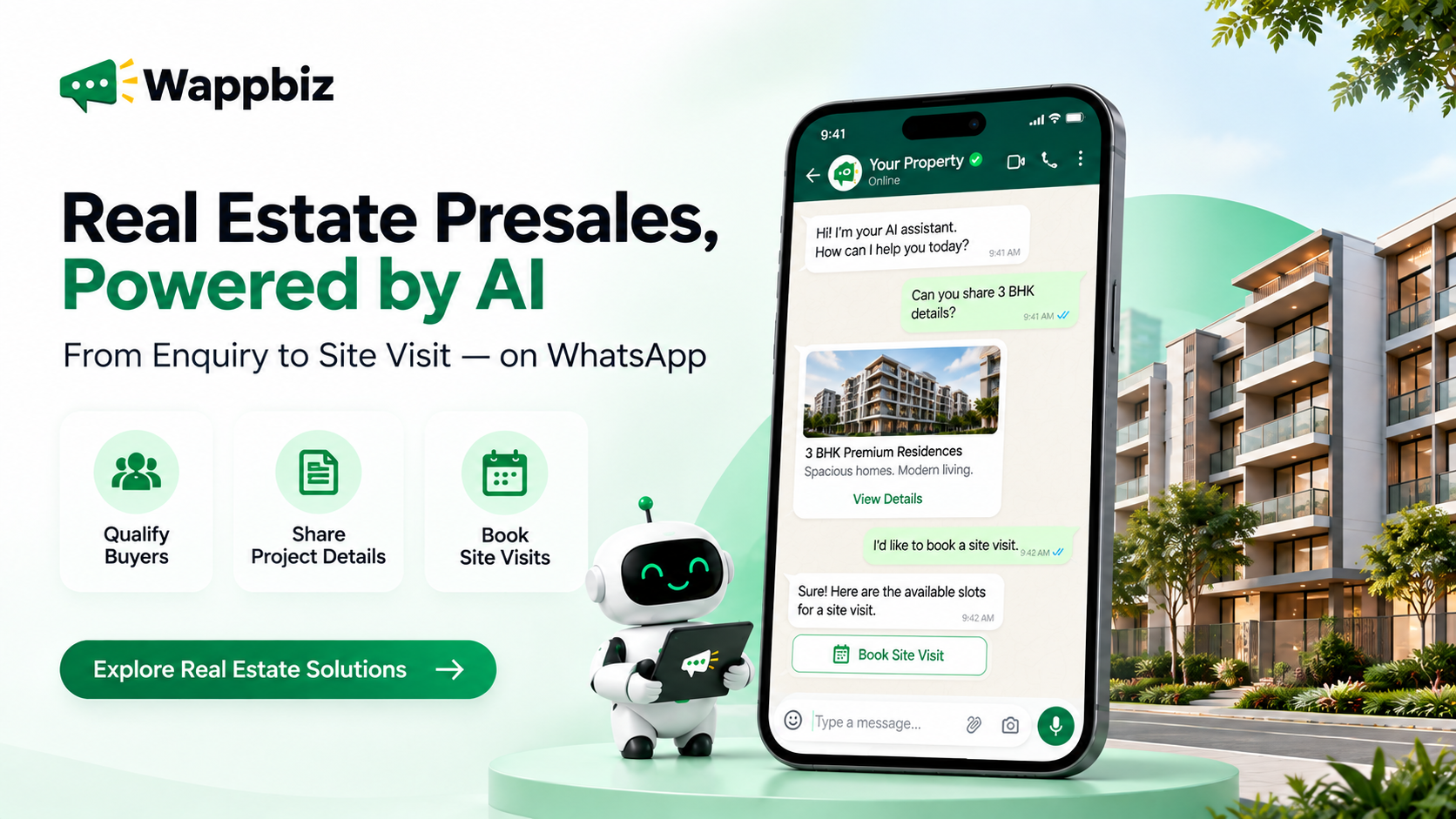
A real estate developer might share project updates relevant to a buyer’s preferred location.
An education provider might send program information aligned with a student’s previous enquiry.
A service business might reach out with renewal reminders based on past purchases.
What was once a simple broadcast channel becomes a way to deliver relevant communication at scale.
5. Conversations Generate Operational Insight
Once conversations are captured systematically, they also begin revealing patterns.
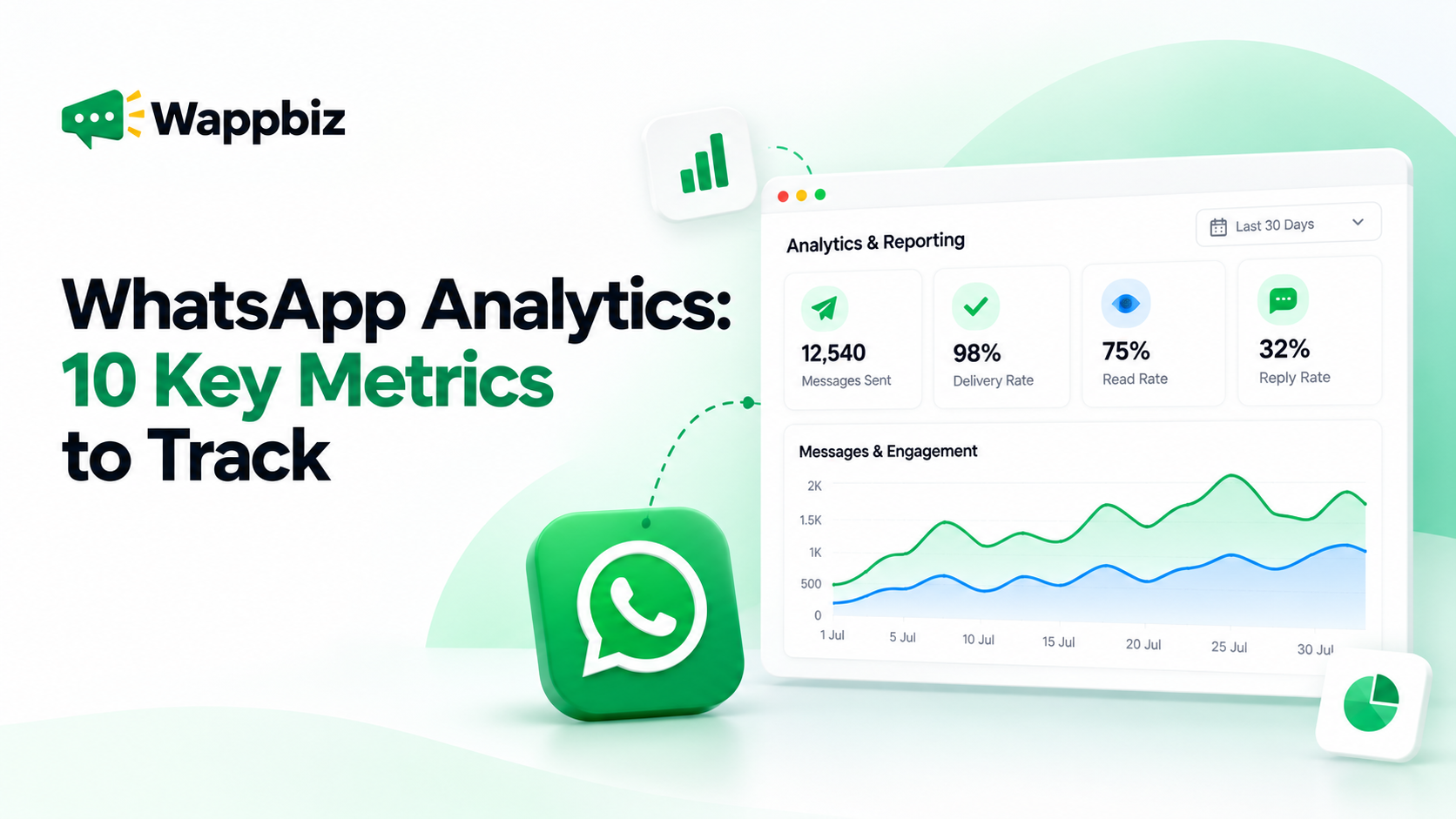
Businesses can see which enquiries convert most frequently, where prospects tend to lose interest, and how quickly teams respond to incoming leads.
These signals often highlight operational improvements that would otherwise remain invisible.
Gradually, the whatsapp platform evolves from a simple communication channel into a source of operational intelligence.
And that shift is what allows businesses to manage conversations at scale without losing clarity over their sales process.
Why This Shift Matters Particularly in India
India has over 535 million WhatsApp users, making it the largest WhatsApp market in the world. For millions of small and mid-sized businesses, it has already become the most direct way to reach customers.
In practical terms, the whatsapp platform is already where a significant portion of business communication takes place.
But the importance of this shift goes beyond technology.
Indian businesses have traditionally been built on relationships. Trust develops through conversation — through repeated interactions, follow-ups, and familiarity over time.
WhatsApp fits naturally into that behaviour.
What changes now is scale.
As more of these relationship-driven conversations move into digital channels, businesses increasingly need ways to organise them without losing the personal continuity that relationships depend on.
This is where platforms designed around structured WhatsApp communication — including systems like Wappbiz are beginning to play an important role.
Not by replacing conversations, but by helping businesses manage them with greater clarity as they grow.
Because in a relationship-driven market like India, the goal is not simply to communicate faster.
It is to maintain trust and continuity even as the number of conversations multiplies.
WhatsApp as the Next Operational Layer
Every phase of business growth introduces a new operational layer.
For many years, email played that role. Then CRM systems became central to managing customer relationships.
Today, for many service businesses, the WhatsApp Marketing Platform is becoming another operational layer.
Not simply a place where messages are exchanged.
But a system where customer relationships, sales conversations, and ongoing support are increasingly managed.
Companies that recognize this shift early will be better positioned to build communication systems that scale alongside their growth.If you’re already thinking about how WhatsApp conversations could be structured more effectively inside your business, the team at Wappbiz would be happy to explore what that could look like.