
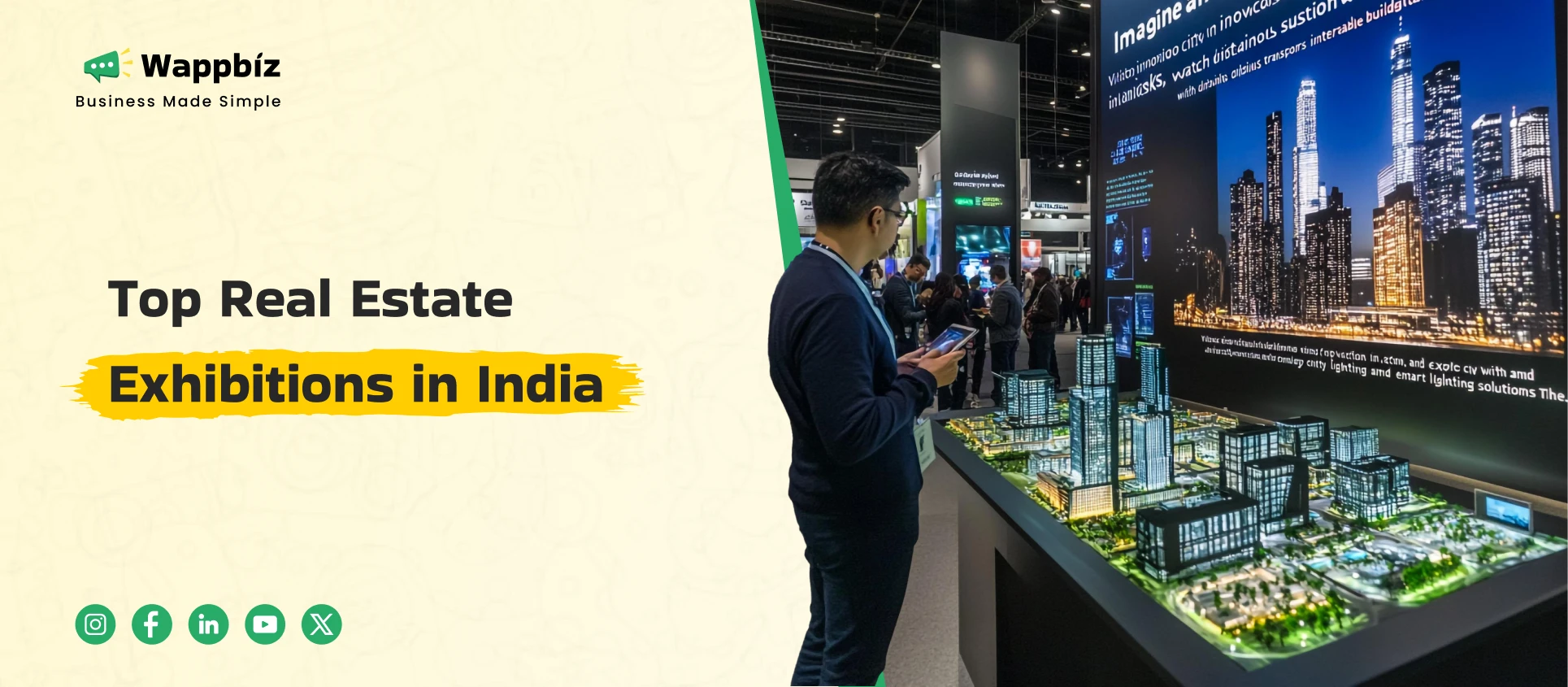
Property expos across India continue to grow every year, but not all of them offer the same value for developers. Each expo attracts a different mix of buyers, investors, and partners which makes choosing the right exhibitions just as important as participating in them. Knowing which real estate exhibitions matter most in 2026 helps developers focus their time, budget, and effort on events that align with their business goals.
1. Real Estate, Banking & Finance Expo (IIT Expo) – Bengaluru
Location: KTPO, Whitefield, Bengaluru
Date: 3–5 April 2026
The Bengaluru edition stands out for its tech-savvy, research-driven buyer base. Visitors here typically arrive well-informed and are actively comparing projects, pricing, and financing options. The expo also benefits from strong participation by banks and financial institutions, supporting faster decision-making.
Best suited for developers targeting IT professionals, first-time buyers, and investors, especially in East and North Bengaluru corridors.
Event details: https://iitexpo.com/event/real/
2. IREX India – Mumbai Edition
Location: The St. Regis, Mumbai
Date: 17–18 April 2026
IREX is distinctly investment-led, combining Indian real estate with international property and immigration-focused discussions. Unlike mass-market expos, it attracts high-net-worth individuals, NRIs, and globally mobile investors looking at real estate as an asset class.
Most relevant for developers showcasing premium, luxury, or investment-grade projects and those seeking international exposure.
Event details: https://www.irexindia.com/show/
3. Real Estate, Banking & Finance Expo (IIT Expo) – Gurugram
Location: HUDA Grounds, Gurugram, India
Date: 17–20 April 2026
The Gurugram edition attracts serious home buyers and property investors from the NCR region who are actively evaluating projects and financing options. With strong participation from banks and financial institutions, it supports faster decision-making and meaningful buyer conversations on the spot.
Best suited for developers targeting end-users and investors in North India, especially those showcasing residential projects in competitive urban markets.
Event details: https://iitexpo.com/event/real/
4. MAPIC India
Location: Jio World Convention Centre, Mumbai
Date: 29–30 September 2026
MAPIC India is not a residential property expo and that’s what makes it unique. It focuses on retail and commercial real estate, bringing together developers, retailers, investors, and leasing heads. Conversations here revolve around leasing strategy, tenant mix, and commercial viability, rather than walk-in sales.
Ideal for developers working on malls, high-street retail, commercial assets, or mixed-use developments.
Event details: https://www.mapic-india.in
5. Real Estate, Banking & Finance Expo (IIT Expo) – Chandigarh
Location: Exhibition Ground, Sector 34, Chandigarh
Date: 20–23 November 2026
This edition draws buyers from Punjab, Haryana, and Himachal Pradesh, making it a strong regional platform. Demand here often leans toward plotted developments, independent homes, and mid-segment housing, with buyers showing clear intent rather than casual interest.
Well-suited for regional developers and builders targeting North India’s residential and plotted markets.
Event details: https://iitexpo.com/event/real/
These exhibitions bring buyers who are already in decision mode. But attending them alone doesn’t guarantee results. The difference between a busy stall and a high-conversion stall lies in how well you prepare.
And that’s where most builders lose momentum.
Why Some Exhibition Stalls Perform Better Than Others
Most exhibition stalls look active. Conversations happen, brochures are shared, numbers are exchanged. Yet days later, teams struggle to identify who was serious, what each visitor wanted, and where to focus follow-ups. The issue isn’t effort it’s the absence of a clear preparation framework.
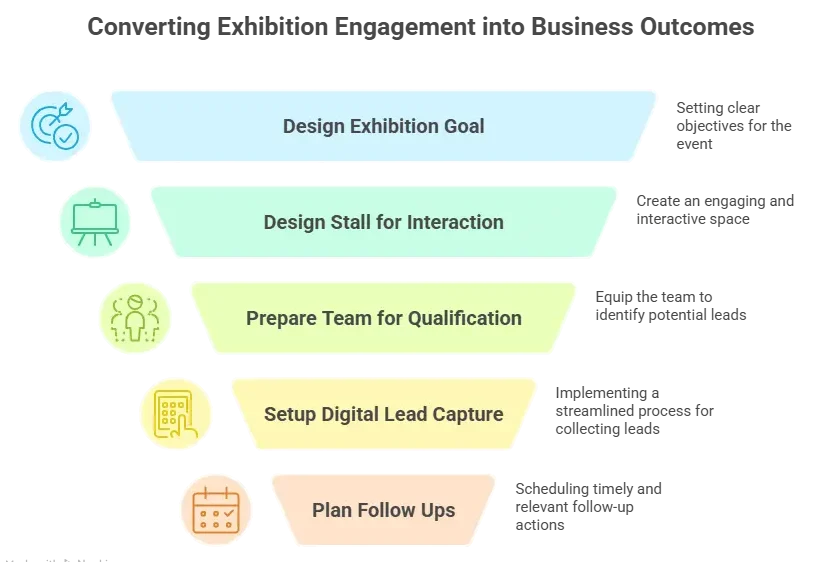
Here’s a practical framework builders are using to turn exhibitions into measurable business outcomes, not just busy stalls.
1. Define the Goal for Each Exhibition
Now that you know which exhibitions to target in 2026, the next step is clarity.
Before each event, decide:
- Is this exhibition about buyer leads, investors, or partnerships?
- Which project is the priority here?
- What should ideally happen after the exhibition site visits, meetings, or follow-ups?
This alignment helps teams stay focused and prevents collecting leads with no clear next step.
2. Design the Stall to Support Interaction
A visually attractive stall draws people in but an interactive stall keeps them engaged.
Builders who stand out usually:
- Focus on fewer projects, explained better
- Reduce dependency on heavy physical models
- Use technology to let visitors explore at their own pace
Interactive screens, touch-based displays, or walkthroughs help visitors connect with the project. That connection makes follow-ups feel more familiar and less transactional later.
3. Prepare the Team for Quick Qualification
Exhibition conversations are brief and unpredictable.
Well-prepared teams:
- Ask the right qualifying questions early
- Understand whether someone is a buyer, investor, or partner
- Share only what’s relevant to that visitor
The focus shifts from “telling” to understanding intent, which leads to far better outcomes.
4. Set Up a Simple, Digital Lead Capture Flow
This is where preparation makes a measurable difference.
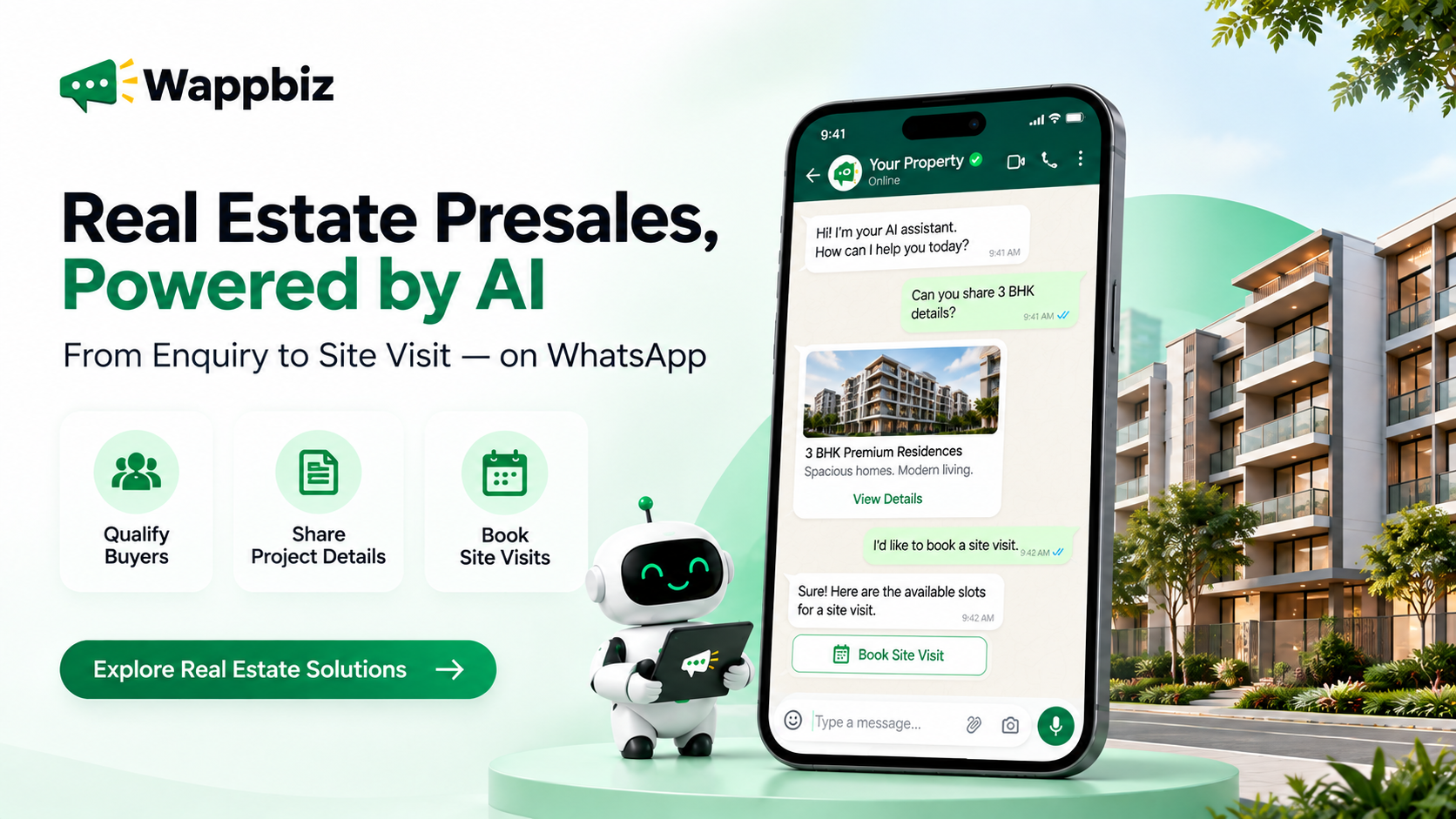
Instead of paper registers or visiting cards, many builders now use WhatsApp-based lead capture through platforms like Wappbiz.
At the stall, the flow looks like this:
- A visitor scans a QR code
- They land directly on a WhatsApp chat
- A chatbot shares brochures, videos, or project details
- On the backend, the lead is registered and tagged as an expo lead
- Based on responses, leads are automatically segmented by interest or budget
This captures intent while the conversation is happening, removes manual data entry, and gives sales teams clean, usable context from day one.
5. Plan Follow-Ups While Context Is Fresh
Because leads are already organised and segmented, follow-ups become easier and more relevant.
Sales teams can:
- Send automated WhatsApp follow-ups based on visitor preference
- Call or message knowing exactly what each person showed interest in
- Spend time on qualified leads instead of cold lists
Partnership conversations also become easier when contacts are stored properly using tools like Augment Cards, while immersive tools from Akar such as Touch TVs or AR/VR walkthroughs, help visitors recall the project more clearly during follow-ups.
What ultimately separates a good exhibition from a forgettable one is how much clarity the team has once the event ends, clarity on who to call, what to say, and why. When that clarity exists, follow-ups become faster, conversations feel relevant, and outcomes improve naturally.For more insights on digital-led real estate marketing and buyer engagement, follow Wappbiz.